
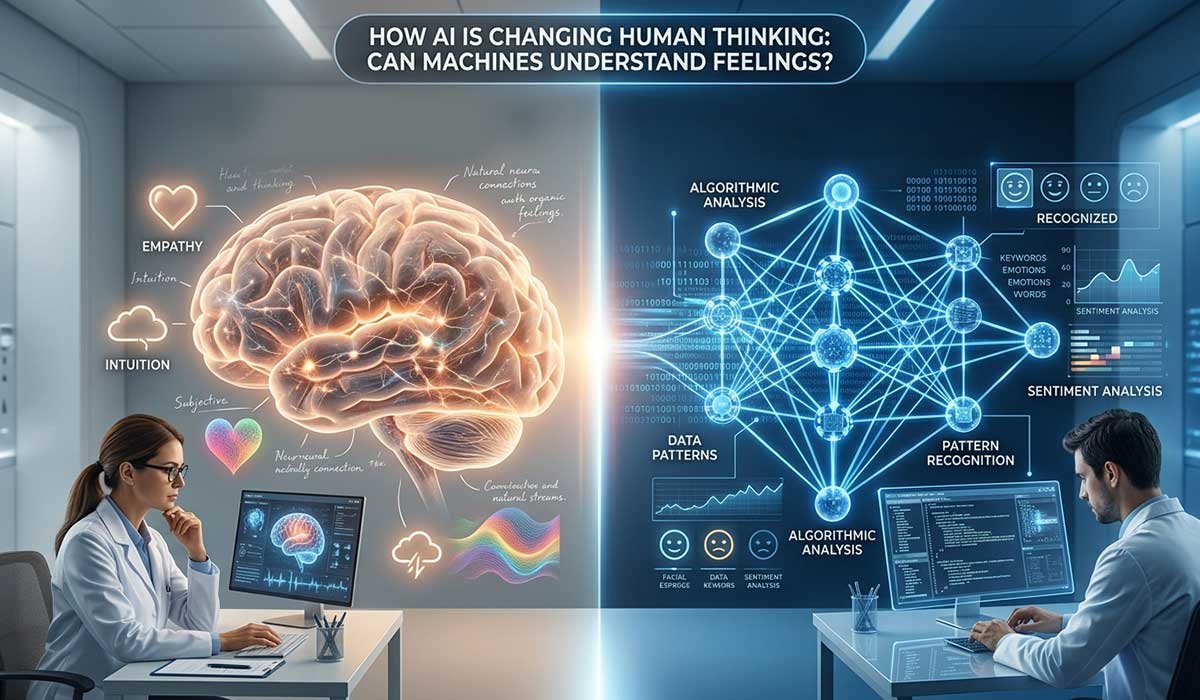
Artificial Intelligence is no longer just a futuristic idea. Today, AI writes emails, creates art, answers emotional questions, recommends life decisions, and even acts like a companion. From smartphones to smart homes, AI has quietly entered almost every part of human life. But one important question is growing louder every day:
Is AI changing the way humans think, feel, and understand the world around them?
This is not just a technology discussion anymore. It has become a psychological, emotional, and social conversation.
Related Post

Humans naturally understand the difference between organic and inorganic things. We know plants grow, animals feel pain, and humans experience emotions. Machines, on the other hand, were traditionally viewed as tools without feelings or consciousness. However, AI is slowly blurring that line. Modern chatbots and AI systems now speak with empathy, remember conversations, and respond in ways that can feel emotionally real.
According to recent research, people increasingly perceive AI systems as having “human-like minds,” especially when those systems communicate naturally and emotionally.

The Human Brain and the “AI Illusion”
The human brain is designed to respond to language, emotion, and connection. When AI says things like “I understand you” or “I’m here for you,” the brain can emotionally react as if another human is speaking.
This phenomenon is often linked to the famous “ELIZA effect,” where humans emotionally connect with software even when they know it is artificial. Modern AI has made this effect much stronger because today’s systems are smarter, more conversational, and deeply personalized.
In simple words, AI may not truly “feel,” but humans can still emotionally feel connected to AI.
That changes human thinking in powerful ways.
How AI Impacts Human Thinking
1. Reduced Critical Thinking
One major concern is that humans may slowly stop thinking deeply because AI provides instant answers.
Instead of researching, analyzing, or solving problems independently, many people now rely on AI tools for quick solutions. Researchers describe this as “cognitive offloading,” where humans transfer mental effort to machines.
This creates convenience, but it can also weaken:
- Problem-solving abilities
- Creativity
- Memory retention
- Independent decision-making
For students and professionals, overdependence on AI may eventually reduce intellectual confidence.
2. Emotional Dependency on Machines
AI companions and chatbots are becoming emotionally engaging. Some users speak to AI daily about loneliness, anxiety, relationships, and personal struggles.
The danger is not that AI becomes human. The danger is that humans may start replacing real emotional relationships with artificial interactions.
Experts warn that AI can create an “attachment economy,” where emotional dependency becomes part of digital life.
This may lead to:
- Social isolation
- Emotional confusion
- Reduced human interaction
- Psychological dependency
Can AI Understand Organic and Inorganic Things?
Humans experience the world biologically and emotionally. We touch, smell, feel pain, and build memories through physical existence. AI does not experience life in this way.
AI can recognize patterns about organic things like:
- Human emotions
- Animal behavior
- Natural language
- Environmental data
But AI does not “feel” these experiences internally.
Similarly, AI processes inorganic objects such as:
- Machines
- Buildings
- Data systems
- Electronics
through calculations and algorithms rather than emotional understanding.
Researchers in embodied cognition argue that true human perception comes from physical interaction with the world, not just data processing.
This is the key difference between natural intelligence and artificial intelligence.
Humans experience reality.
AI simulates understanding.
Pros of AI’s Influence on Human Thinking
Faster Learning
AI helps people learn quickly through instant explanations, personalized education, and interactive assistance.
Increased Creativity
Writers, designers, musicians, and marketers now use AI to generate ideas and improve productivity. Studies show AI can boost creative output when used as a collaborative tool.
Mental Support
Some AI systems provide emotional support for users dealing with stress, loneliness, or anxiety. While not a replacement for humans, AI can still offer comfort in difficult moments.
Better Accessibility
AI supports people with disabilities through voice assistance, translation, automation, and adaptive technologies.
Cons of AI’s Influence on Human Thinking
Overreliance on Technology
Too much AI usage may weaken human memory, focus, and independent thought.
Emotional Manipulation
AI systems can imitate empathy without genuinely understanding emotion. This creates ethical concerns about trust and emotional influence.
Loss of Human Connection
If people become more comfortable talking to machines than humans, society could experience weaker personal relationships.
Confusion Between Reality and Simulation
As AI becomes more human-like, distinguishing genuine emotional experience from artificial responses may become psychologically difficult for some users.
The Future: Human Intelligence vs Artificial Intelligence
The future should not be about humans competing against AI.
Instead, the goal should be balance.
AI is powerful when it enhances human abilities rather than replacing them. The healthiest future may come from using AI as a supportive tool while protecting human creativity, empathy, and emotional authenticity.
Technology can simulate intelligence.
But human consciousness, emotion, morality, and lived experience remain deeply organic.
That difference still matters.