Webb Telescope Uncovers Unusual Chemistry
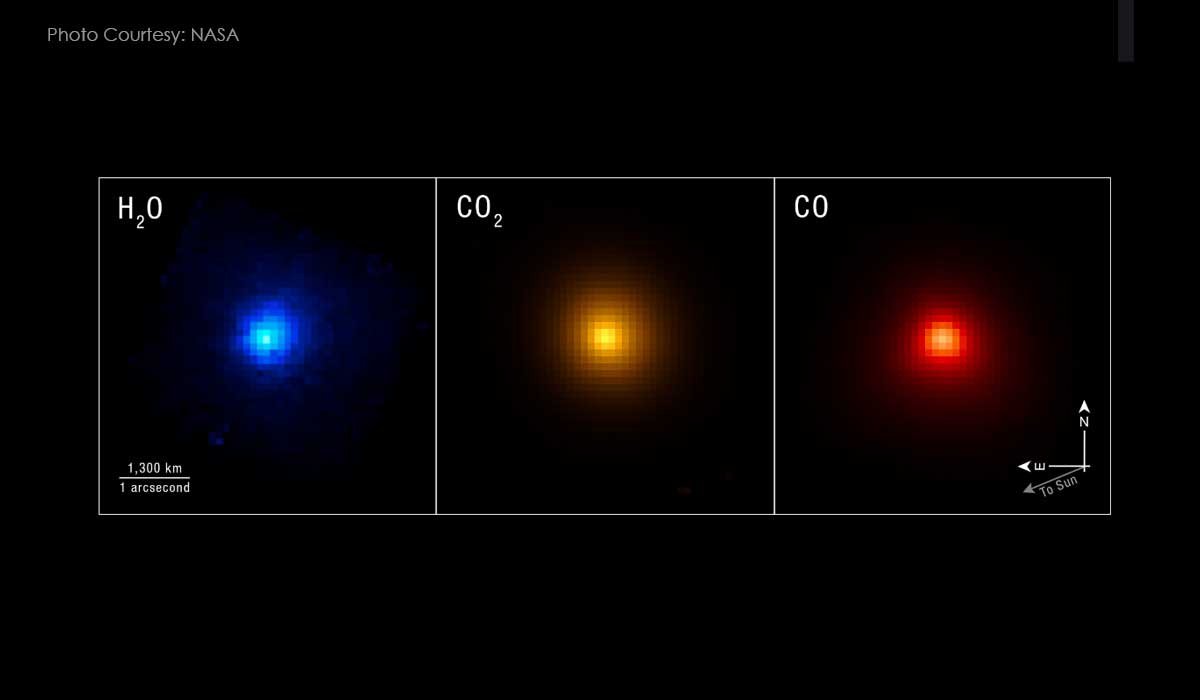
The James Webb Space Telescope has been instrumental in studying 3I/ATLAS. Earlier observations detected methane and unusually high levels of carbon dioxide within the comet, indicating that it formed under conditions very different from those experienced by most comets in our solar system.
However, the latest findings go even further. Researchers analyzed the isotopic composition of the comet’s gases and discovered chemical signatures unlike anything commonly found among solar system comets. The measurements suggest the object formed in an extremely cold environment, likely at temperatures below minus 240 degrees Celsius.
These conditions point toward a distant origin in the early Milky Way, where the chemistry and environment differed significantly from the region where our Sun later formed.
A Visitor Older Than the Solar System
One of the most remarkable conclusions from the research is the estimated age of 3I/ATLAS. Scientists believe the comet may have formed between 10 and 12 billion years ago, making it far older than our solar system, which is approximately 4.6 billion years old.
If confirmed, this would make 3I/ATLAS one of the oldest comet-like objects ever studied. It likely formed during an era when the Milky Way was still relatively young and undergoing intense periods of star formation.
Because the comet has remained largely unchanged during its long journey through space, it serves as a time capsule carrying information about conditions that existed billions of years ago.
Why This Discovery Matters
Studying interstellar objects allows scientists to compare the building blocks of planetary systems throughout the galaxy. Most of what researchers know about planet formation comes from studying our own solar system. Objects like 3I/ATLAS provide a rare chance to test whether similar processes occur around other stars.
The unusual isotopic ratios found within the comet suggest that planet-forming environments can vary dramatically across the galaxy. This information helps astronomers improve models of planetary formation and understand how common different types of worlds may be.
The findings also demonstrate the extraordinary capabilities of the James Webb Space Telescope. By analyzing faint chemical signatures from a small object moving through space, Webb is helping researchers uncover secrets from the distant past of our galaxy.