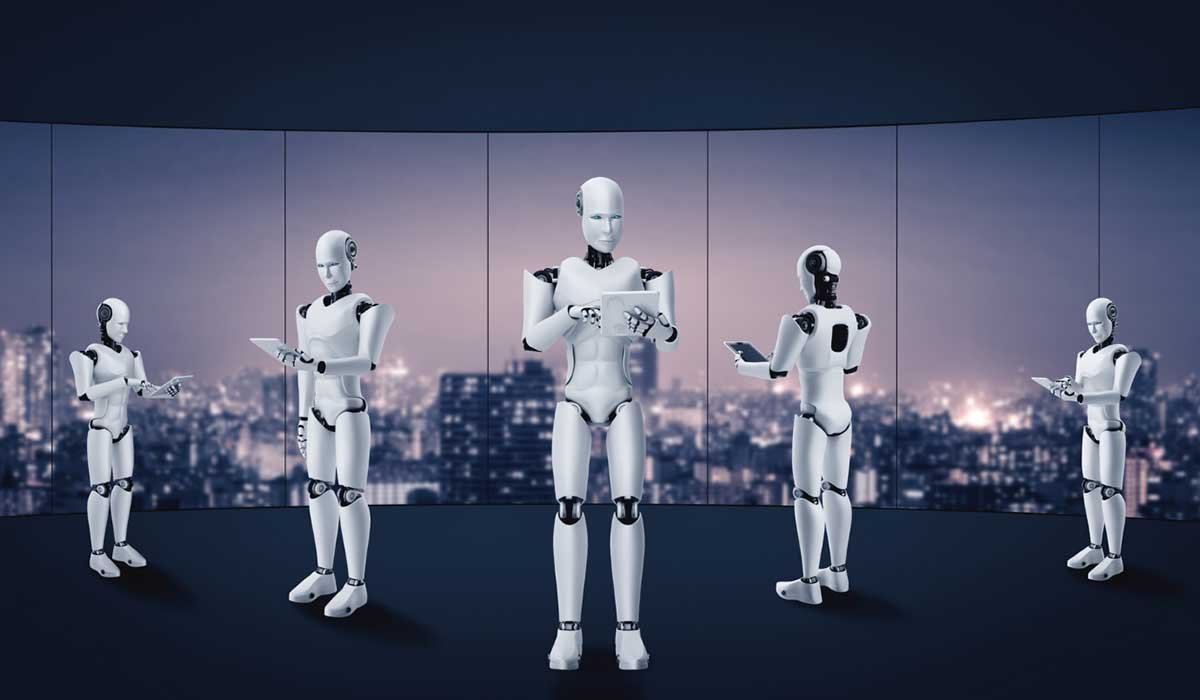
Artificial Intelligence is entering a much more practical and powerful stage in 2026. It is no longer limited to simple chatbots or basic automation tools that follow fixed instructions. Today, AI agents are becoming digital co-workers smart systems that can think, plan, analyse, and complete tasks with minimal human involvement.
From startups to large global companies, businesses are using AI agents to improve productivity, reduce manual work, and make faster decisions. These systems are helping teams work smarter, not just faster.
The conversation has changed. Businesses are no longer asking, “Should we use AI?” Instead, they are asking, “How quickly can we integrate AI agents into daily operations?”
Related Post
What Are AI Agents?
AI agents are advanced software systems designed to work independently and achieve specific goals. Unlike traditional automation tools that only follow pre-set commands, AI agents can learn from data, understand context, and adjust their actions based on changing situations.
They can analyse large amounts of information in real time, make informed decisions, and even improve their performance over time.
Think of them as intelligent assistants rather than simple software.
For example, an AI agent in a marketing team can help plan a full campaign, write SEO-friendly blogs, study customer behaviour, and even optimise ad performance automatically. This combination of decision-making and execution is what makes AI agents so valuable.
How Businesses Are Using AI Agents
AI agents are already creating real impact across industries.
Business Operations
Many companies use AI agents to handle repetitive admin tasks such as scheduling meetings, preparing reports, managing internal workflows, and tracking team performance.
This reduces time spent on routine work and allows employees to focus on more important business decisions.
Customer Support
Customer service has changed significantly with AI agents. Instead of giving scripted replies, these systems can understand customer intent, solve more complex issues, and offer personalised support 24/7.
This improves customer satisfaction while reducing pressure on support teams.
Marketing and Content Creation
AI agents are transforming digital marketing by helping businesses create blogs, manage social media content, run advertising campaigns, and improve SEO performance.
This allows businesses to grow their online presence without constantly increasing team size.
Finance and Accounting
In finance, accuracy matters. AI agents help with invoice management, fraud detection, expense tracking, and financial forecasting.
This reduces human error and supports faster, smarter financial decisions.

Impact on Jobs and the Workforce
The rise of AI agents has naturally raised concerns about job security. While some repetitive roles may be reduced, the bigger picture shows transformation rather than total replacement.
Routine tasks are being automated, but human skills like creativity, leadership, emotional intelligence, and strategic thinking are becoming even more valuable.
At the same time, new career opportunities are growing in areas like AI training, prompt engineering, automation consulting, and AI ethics.
The future workplace is likely to be built around human-AI collaboration rather than competition.
Benefits of AI Agents
Businesses adopting AI agents are seeing clear advantages.
Productivity improves because tasks are completed faster and with less manual effort. Operational costs often decrease as automation handles repetitive processes. Decision-making becomes quicker because AI provides real-time insights. Accuracy also improves, especially in data-heavy tasks where human errors are common.
For fast-moving industries like technology, finance, and e-commerce, early adoption can create a strong competitive advantage.
Risks and Ethical Concerns
Despite the benefits, AI agents also bring challenges.
Data privacy remains a major concern, especially when handling sensitive customer or business information. Bias in decision-making can happen if AI systems are trained using poor-quality or unfair data. Over-dependence on automation may also reduce human oversight in important decisions.
This is why businesses need strong AI policies, ethical guidelines, and clear human supervision.
Responsible AI adoption is just as important as innovation itself.
Looking Ahead
By 2030, AI agents are expected to become a normal part of everyday business operations. We may see fully autonomous workflow systems, AI agents working across departments, and deeper integration with robotics and connected devices.
Businesses that start adapting now will be better prepared for the future.
AI agents are not just changing how work gets done—they are changing how businesses think, grow, and compete in the digital age.
What are AI agents?
AI agents are intelligent systems that can perform tasks independently, make decisions, and improve based on data and experience.
Are AI agents replacing jobs?
They are mainly transforming jobs by automating repetitive tasks while creating new roles in technology, strategy, and AI management.
Which industries use AI agents?
Industries such as finance, healthcare, marketing, customer service, logistics, and e-commerce are widely using AI agents.
Are AI agents safe for businesses?
Yes, when businesses use proper data protection, ethical guidelines, and human oversight, AI agents can be both safe and highly effective.
Disclaimer: This article is created for informational purposes only. It reflects current technology trends and industry insights as of 2026. Future developments in AI may vary, and readers should conduct independent research before making business or technology decisions.