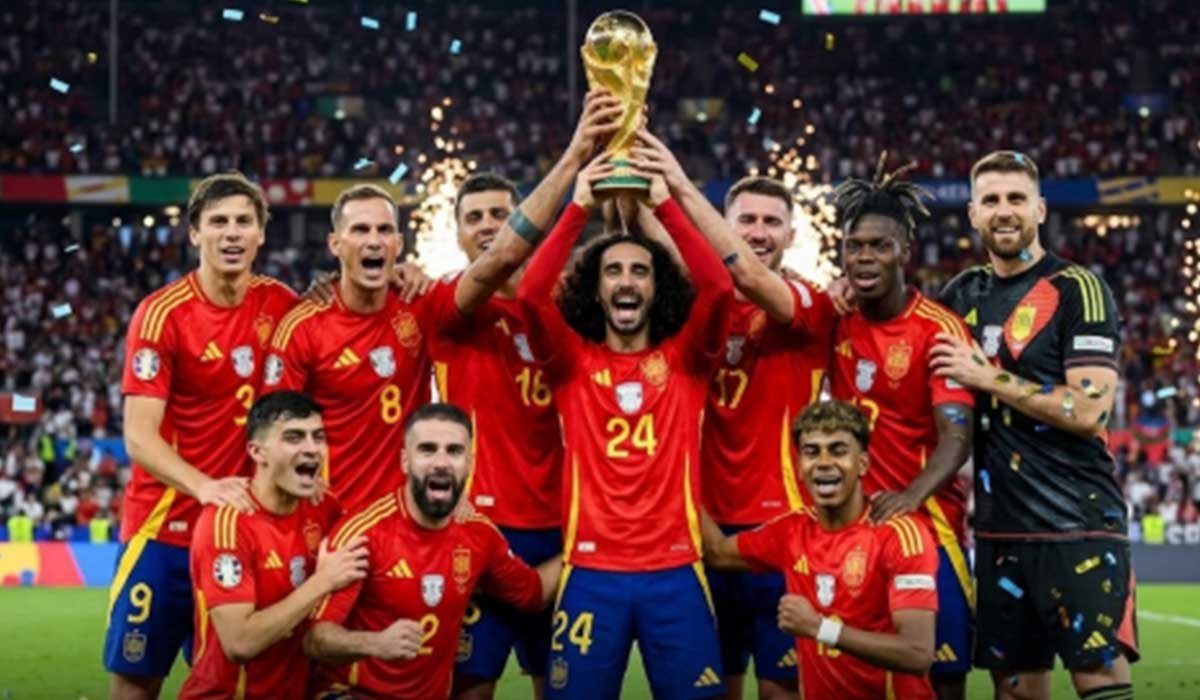
Spain are world champions once again.
After a thrilling and hard-fought FIFA World Cup 2026 final, Spain defeated defending champions Argentina 1-0 after extra time to lift football’s biggest prize for the second time in their history. A decisive goal from Ferran Torres in extra time finally broke Argentina’s resistance and crowned Spain’s remarkable tournament campaign.
For football fans around the world, the final was more than a battle between two elite teams. It was also a clash between Spain’s collective strength and Argentina’s hopes of one final World Cup triumph led by Lionel Messi.
A Final Defined by Patience
The scoreline may suggest a close contest, but the match itself told a different story.
From the opening whistle, Spain controlled possession, dictated the tempo, and consistently pushed Argentina onto the defensive. Their midfield combination of Rodri, Pedri, and Dani Olmo ensured Spain remained in command throughout much of the match. Argentina struggled to create meaningful attacking opportunities and found themselves relying heavily on defensive resilience and goalkeeper Emiliano Martínez.
Despite Spain creating numerous chances, Martínez produced a series of outstanding saves that kept Argentina in the game. As the minutes ticked away, it appeared the match could be heading toward penalties.
However, Spain never abandoned their approach.
They remained calm, continued moving the ball intelligently, and trusted the style that had brought them success throughout the tournament. Their persistence eventually paid off in extra time.
Ferran Torres Delivers the Winning Moment
The breakthrough finally arrived in the 106th minute.
Following sustained pressure, Ferran Torres capitalized on a loose ball inside the penalty area and calmly finished to send Spanish supporters into celebration. The goal proved to be the defining moment of the final and secured Spain’s place at the top of world football.
Torres’ contribution highlighted the depth within Spain’s squad. While several stars attracted headlines throughout the tournament, Spain’s success was built on contributions from players across the entire team.
That collective strength became one of the defining stories of the tournament.
Messi's World Cup Dream Comes to an End
For Lionel Messi, the final carried enormous emotional significance.
At 39 years old, many viewed the tournament as his final appearance on football’s biggest stage. After leading Argentina to World Cup glory in 2022, Messi entered the competition hoping to guide his country to back-to-back titles and add one more chapter to an already legendary career.
Throughout the tournament, Messi remained Argentina’s most influential player, contributing goals, assists, and moments of brilliance when his team needed them most.
Yet Spain’s defensive organization proved too difficult to overcome.
The Spanish back line effectively limited Messi’s opportunities, while Argentina struggled to create clear chances. By full-time, Argentina had been largely neutralized by a disciplined Spanish side determined not to allow history to repeat itself.
As the final whistle approached, emotions were visible on Messi’s face. Although the result was disappointing, his legacy as one of football’s greatest players remains unquestioned.
Spain's Defensive Masterclass
One of the most impressive aspects of Spain’s World Cup campaign was their defensive consistency.
Throughout the tournament, Spain conceded only one goal, setting a remarkable benchmark for a World Cup-winning team. Their ability to combine possession-based football with defensive discipline made them arguably the most balanced side in the competition.
Goalkeeper Unai Simón provided reliability whenever called upon, while defenders Pau Cubarsí, Aymeric Laporte, and their teammates consistently limited opposition opportunities.
Against Argentina, Spain’s defensive structure ensured that even one of football’s greatest attacking players struggled to influence the outcome.
The Rise of a New Spanish Generation
Spain’s triumph also signals the arrival of a new generation of football stars.
Young talents such as Lamine Yamal and Pau Cubarsí played important roles throughout the tournament, while experienced leaders like Rodri provided stability and composure.
The blend of youth and experience allowed Spain to navigate a challenging tournament that featured some of the strongest national teams in the world. Their performances against elite opposition demonstrated maturity beyond their years and suggested that Spain could remain a dominant force for years to come.
For Spanish football, the victory represents the continuation of a proud tradition that includes their historic 2010 World Cup triumph.
Why Spain Deserved the Title
Championships are rarely won by individual brilliance alone.
Spain’s success was built on structure, discipline, teamwork, and belief in a clear footballing identity. While Argentina often relied on moments of magic from Messi, Spain trusted their system and remained committed to their philosophy from the first match to the last.
That commitment ultimately made the difference.
The final showcased how patience, tactical discipline, and collective effort can overcome even the most emotional and star-driven narratives.
A Historic Achievement
By winning the FIFA World Cup 2026, Spain secured their second men’s World Cup title and reinforced their status among football’s elite nations. The victory also marked a historic moment as Spain became the first country to simultaneously hold both the men’s and women’s World Cup titles.
For Argentina, the defeat was painful, but reaching another World Cup final highlighted the enduring quality of their squad and the extraordinary influence of Lionel Messi.
For Spain, however, the night belonged entirely to them.
After years of rebuilding and developing a new generation of talent, La Roja once again stand at the summit of world football.
Their persistence, teamwork, and unwavering belief have delivered football’s greatest prize.