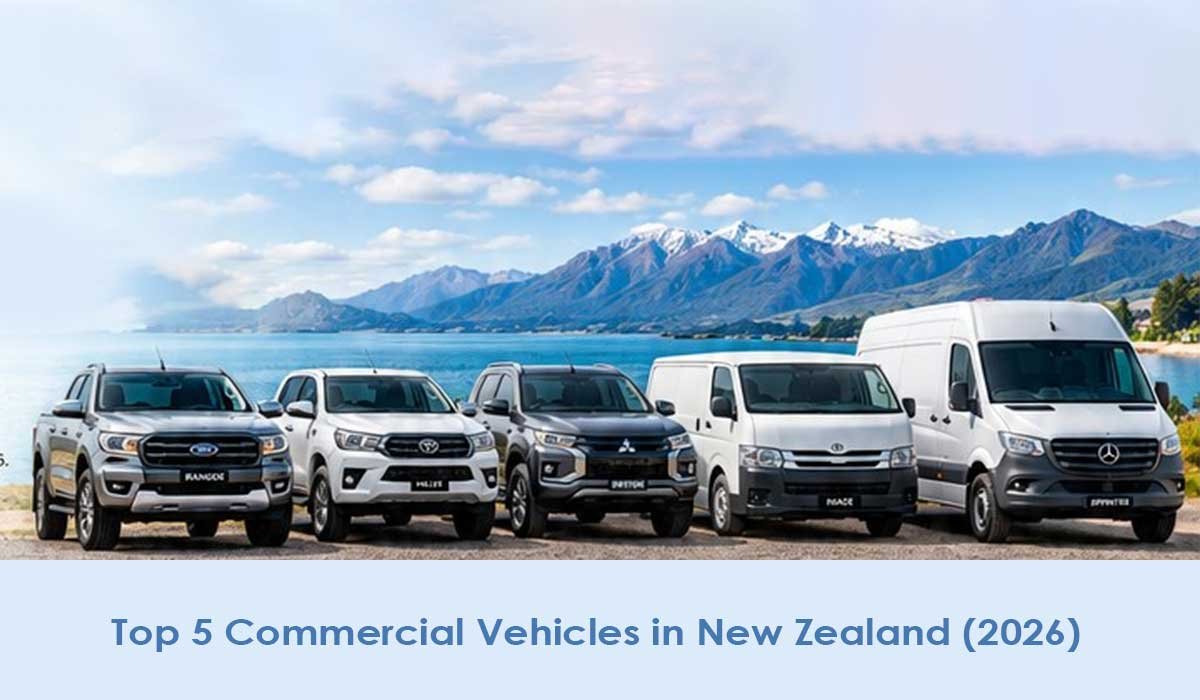
Choosing the right commercial vehicle is an important decision for any business in New Zealand. Whether you run a delivery service, construction company, cleaning business, landscaping service, trade business or retail operation, the right vehicle can help improve productivity and make everyday work easier.
New Zealand businesses have several options, from powerful work utes to spacious cargo vans. However, the best vehicle depends on the type of work you do, the equipment you carry, your daily travel distance and your operating budget.
In this guide, we look at five commercial vehicles worth considering in New Zealand in 2026: the Ford Ranger, Toyota Hilux, Mitsubishi Triton, Toyota Hiace and Mercedes-Benz Sprinter.
Related Post
Why Choosing the Right Commercial Vehicle Matters
A commercial vehicle is more than just transportation. For many small businesses, it is an essential working asset.
The right vehicle can help businesses transport tools, deliver products, carry equipment and reach customers efficiently. It can also influence fuel expenses, maintenance budgets and the professional image presented to customers.
Before purchasing a vehicle, business owners should consider:
Purchase price: Does the vehicle fit your business budget?
Fuel or charging costs: How much will daily travel cost?
Load capacity: Can it safely carry your equipment or products?
Reliability and maintenance: Are servicing and replacement parts accessible?
Safety: Does it offer suitable safety features for your work?
Resale value: Could you recover a reasonable amount when upgrading?
New Zealand’s transport agency recommends assessing the intended workload, operating environment, payload, fuel efficiency, maintenance and safety before selecting a commercial vehicle.
1. Ford Ranger - A Versatile Ute for Trades and Contractors
The Ford Ranger is a popular choice among New Zealand businesses that need a practical work ute with towing capability and a broad range of configurations.
It can suit builders, electricians, plumbers, landscapers, agricultural operators and contractors who regularly transport tools, materials or equipment.
Why consider the Ford Ranger?
The Ranger offers different configurations and grades, allowing businesses to choose a vehicle suited to their particular workload. Depending on the model, it can also provide substantial towing capability for trailers and work equipment.
A ute can be especially useful for businesses that operate across urban areas, rural roads and construction sites.
Best suited for
Construction and building contractors
Landscaping and gardening businesses
Tradespeople carrying tools and materials
Businesses towing work trailers
What to consider: Compare the payload of the exact model you intend to buy. Passengers, accessories and equipment all contribute to the vehicle’s load, so a high towing rating does not automatically mean high carrying capacity.
2. Toyota Hilux – A Practical Workhorse for Demanding Jobs
The Toyota Hilux has a long-established presence in New Zealand’s work-vehicle market. It is worth considering for businesses that require a versatile ute for everyday commercial duties.
Its range of body styles and configurations can help businesses choose between transporting passengers, carrying equipment or fitting a suitable work body.
Why consider the Toyota Hilux?
The Hilux can be a practical option for businesses operating on worksites, farms and rural properties, as well as those travelling between customer locations.
Its established market presence also makes it worth comparing when researching servicing options, parts availability and resale value.
Best suited for
Agricultural and rural businesses
Building and maintenance contractors
Property maintenance services
Businesses needing a work ute for mixed road conditions
What to consider: Check the payload, towing rating, fuel consumption and safety equipment of the specific variant. Actual running costs will depend on the vehicle, workload and driving conditions.
3. Mitsubishi Triton - A Ute Worth Comparing for Value
The Mitsubishi Triton is another commercial ute to include on a New Zealand business buyer’s shortlist. It is an option for businesses that need a combination of utility, passenger space and towing capability.
Rather than choosing a vehicle based on its purchase price alone, business owners should compare the overall cost of ownership across competing models.
Why consider the Mitsubishi Triton?
The Triton is available in different configurations for a variety of work requirements. It may be suitable for businesses that need to transport employees, carry tools and equipment, or tow a trailer.
Comparing dealer offers, servicing arrangements, warranty conditions and included equipment can help identify the best fit for a particular business.
Best suited for
Small trade businesses
Property maintenance contractors
Landscaping operators
Businesses seeking a versatile work ute
What to consider: Compare the final on-road price, payload and towing limits, as well as the cost of accessories such as canopies, roof racks and tool storage.
4. Toyota Hiace - A Strong Option for Deliveries and Service Businesses
Not every business needs an open ute tray. For companies transporting parcels, stock, supplies or equipment, a cargo van may be a more practical solution.
The Toyota Hiace is a commercial van worth considering for businesses that need enclosed storage and a dedicated cargo area.
Why consider the Toyota Hiace?
Its van format can help protect goods from the weather and provide an organised space for deliveries or equipment. Different configurations can suit a range of commercial activities.
For businesses making frequent deliveries in towns and cities, an enclosed cargo area can make loading, unloading and securing products easier.
Best suited for
Courier and delivery services
Retail and wholesale businesses
Cleaning companies
Mobile repair and service businesses
Small businesses transporting products or supplies
What to consider: Measure the cargo area against your largest items and check the usable payload after accounting for shelving, racks and other fitted equipment.
5. Mercedes-Benz Sprinter – For Larger Delivery and Transport Requirements
Businesses requiring a larger cargo area may want to consider the Mercedes-Benz Sprinter.
It is a commercial van option for operators whose work involves transporting larger loads, bulky equipment or substantial quantities of goods.
Why consider the Mercedes-Benz Sprinter?
Depending on its configuration, the Sprinter can offer a larger working space than a typical compact or medium-sized van. This can be useful for delivery businesses and service operators with demanding storage requirements.
Businesses should choose the configuration according to their load, route, parking access and expected daily mileage.
Best suited for
Larger delivery operations
Furniture and equipment transport
Commercial service providers
Businesses needing a spacious cargo van
What to consider: A larger vehicle may have higher purchase, insurance, servicing and operating costs. Check the vehicle’s dimensions and weight limits, particularly if you frequently visit residential properties, underground car parks or narrow urban streets.
Comparison: Which Commercial Vehicle Is Right for Your Business?
| Vehicle | Main advantage | Suitable business uses |
|---|---|---|
| Ford Ranger | Versatile ute and towing capability | Trades, construction, landscaping |
| Toyota Hilux | Established work-ute option | Agriculture, contractors, property work |
| Mitsubishi Triton | Alternative work-ute choice | Small businesses and trades |
| Toyota Hiace | Enclosed cargo space | Deliveries, cleaning, mobile services |
| Mercedes-Benz Sprinter | Larger van configurations | Bulky deliveries and commercial transport |
This is a practical shortlist, not a universal ranking of vehicle quality. The right choice depends on the specific model, configuration and business requirements.
How to Choose the Best Commercial Vehicle in New Zealand
1. Calculate your total operating costs
Do not look at the purchase price alone. Estimate fuel or charging, insurance, servicing, tyres, registration, finance and any relevant road user charges. If you are purchasing through a business, discuss the tax treatment with your accountant.
2. Check payload and towing requirements
A vehicle may have a high maximum towing rating but limited remaining payload once passengers, tools and accessories are added. Make sure the vehicle meets the actual demands of your work.
3. Think about your daily routes
A ute may suit construction sites and rural roads, while a van may be more useful for urban deliveries. Consider parking, loading access, road conditions and the distance travelled each day.
4. Compare new and used vehicles
A used commercial vehicle may reduce the initial cost, but inspect its service history, mechanical condition, tyres, safety systems and remaining warranty. An independent pre-purchase inspection can help identify potential problems.
5. Consider future business growth
If your business expects to expand, think about whether you may need extra cargo space, a larger payload, additional passenger seats or an electric vehicle in the future.
Should Your Business Consider an Electric Commercial Vehicle?
Electric vans may be worth evaluating for businesses with predictable urban routes, regular depot access and suitable charging facilities.
However, the decision should be based on real operating requirements rather than the powertrain alone. Consider the vehicle’s usable range under load, charging time, purchase cost, payload and access to charging facilities.
Businesses travelling long distances, carrying heavy loads or operating in remote locations should carefully assess whether an electric vehicle meets their needs.

FAQs
Which commercial vehicle is best for small businesses in New Zealand?
It depends on the work. A ute may suit trades and contractors, while a van may be better for deliveries, cleaning services and businesses carrying enclosed loads.
Is a ute or a van better for commercial use?
A ute offers an open load area and can be useful for towing or carrying bulky work equipment. A van provides enclosed cargo space and may be more suitable for parcels, stock and tools that need protection from the weather.
What should I check before buying a commercial vehicle?
Check the purchase price, payload, towing capacity, fuel consumption, safety features, service history, warranty and ongoing operating costs.
Are electric commercial vehicles worth considering in New Zealand?
They can be suitable for some businesses, particularly those with predictable routes and access to charging. Assess range, charging time, payload and total ownership costs before purchasing.
Disclaimer: This article is for general information only. Vehicle specifications, availability, prices and operating costs may vary by model year, trim and configuration. Confirm current details with authorised New Zealand dealers before making a purchase.