
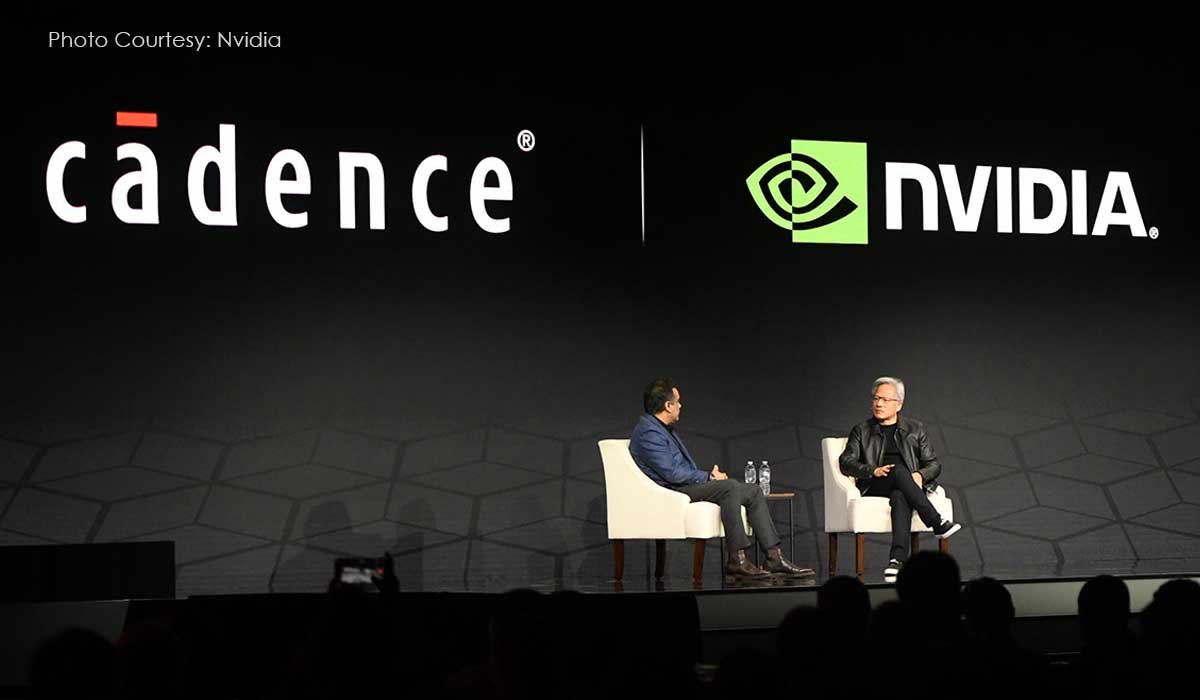
The future of engineering is no longer just about precision—it’s about speed, intelligence, and adaptability. The collaboration between Cadence Design Systems and NVIDIA Blackwell clearly signals that the industry is entering a new phase where AI doesn’t just assist engineers—it actively reshapes how design happens.
This isn’t just another tech partnership. It feels more like a turning point in how complex problems are solved, from semiconductor design to advanced system simulations.
The Real Breakthrough: Speed That Changes Decision-Making
Engineering simulations have traditionally been time-consuming. In many cases, tasks like fluid dynamics analysis or chip verification could take days or even weeks.
Related Post

With GPU acceleration powered by NVIDIA Blackwell integrated into Cadence platforms, these timelines are shrinking dramatically. Simulations that once required massive computing clusters can now be completed much faster, sometimes within hours.
This kind of speed transforms workflows. Engineers can:
- Explore more design options
- Iterate faster
- Identify issues earlier
And that ultimately leads to better, more efficient innovation.

AI Is No Longer a Tool It’s Becoming a Co-Engineer
One of the most fascinating aspects of this collaboration is the rise of intelligent AI systems that actively assist in engineering.
Instead of simply running commands, AI can now:
- Support chip design processes
- Optimize system performance
- Automate repetitive tasks
This reflects a bigger shift toward AI-driven design, where machine learning helps analyze data and improve outcomes.
We are moving from:
“Engineers using software tools” → “Engineers collaborating with AI systems”
Why NVIDIA Blackwell Matters So Much
NVIDIA Blackwell isn’t just another hardware upgrade. It is built specifically for:
- AI workloads
- High-performance computing
- Complex simulations
When combined with Cadence technologies, it allows engineers to tackle challenges that were previously too resource-intensive.
Some solutions powered by this combination are showing massive performance improvements, enabling faster design cycles and deeper analysis.
This is not just an upgrade it’s a leap forward in capability.
Beyond Chips: Impact Across Industries
The impact of this collaboration extends far beyond semiconductor design.
Industries that could benefit include:
- Aerospace – faster and more accurate simulations
- Healthcare – improved modeling for research and development
- Automotive – better system design and testing
- Data Centers – optimized infrastructure planning
This shows a larger trend where AI-powered simulation is becoming essential across sectors.
A Turning Point for Engineering
From an opinion standpoint, this collaboration represents a major shift in how engineering will evolve in the coming years.
1. Engineering is Becoming Data-Driven
Decisions are increasingly guided by insights generated through AI and simulation.
2. Speed is the New Competitive Advantage
Companies that can iterate faster will lead innovation.
3. Engineers Will Work Alongside AI
The role of engineers is evolving toward strategy, creativity, and system-level thinking.
Challenges We Shouldn’t Ignore
While the benefits are clear, there are still some challenges:
- High cost of advanced computing infrastructure
- Dependence on powerful hardware
- Need for high-quality data for AI models
Not every organization can adopt these technologies at the same pace, which may create gaps in innovation capability.
Engineering is Entering an AI-First Era
Cadence leveraging NVIDIA Blackwell is more than just a technical improvement—it represents the future of engineering.
We are moving toward a world where:
- Simulations happen faster than ever
- AI plays a key role in design decisions
- Innovation cycles become significantly shorter
This is just the beginning. The companies that adapt early will shape the next wave of technological progress.
Disclaimer: This article is an independently created opinion-based summary for informational purposes only. It does not represent official statements from any company mentioned.
What is NVIDIA Blackwell?
It is a next-generation GPU architecture designed for AI, simulation, and high-performance computing.
How does this help engineers?
It reduces simulation time, improves efficiency, and enables faster innovation.
What is AI-driven engineering design?
It involves using AI to automate, optimize, and enhance engineering processes.
Which industries benefit the most?
Semiconductors, aerospace, healthcare, automotive, and data infrastructure sectors.