Space exploration is often presented through spectacular rocket launches, dramatic images of astronauts floating in space and ambitious plans to reach the Moon or Mars. But there is another part of spaceflight that deserves just as much attention: bringing astronauts safely back to Earth.
NASA and SpaceX are preparing for the return of the SpaceX Crew-12 mission from the International Space Station (ISS), with NASA planning to stream the crew’s undocking, re-entry and splashdown live.
NASA currently is targeting Crew-12’s undocking from the International Space Station for Wednesday, October 7, 2026, followed by a planned splashdown off the coast of California on Thursday, October 8. The schedule remains dependent on spacecraft readiness, recovery operations and weather conditions in the recovery area.
Related Post

For people watching from New Zealand, this is more than another space event to follow online. In my view, Crew-12’s return is a good example of how modern technology is changing the way humans work in space — and how commercial companies are becoming an increasingly important part of that future.

Who is returning with SpaceX Crew-12?
The Crew-12 mission includes four astronauts from different space agencies.
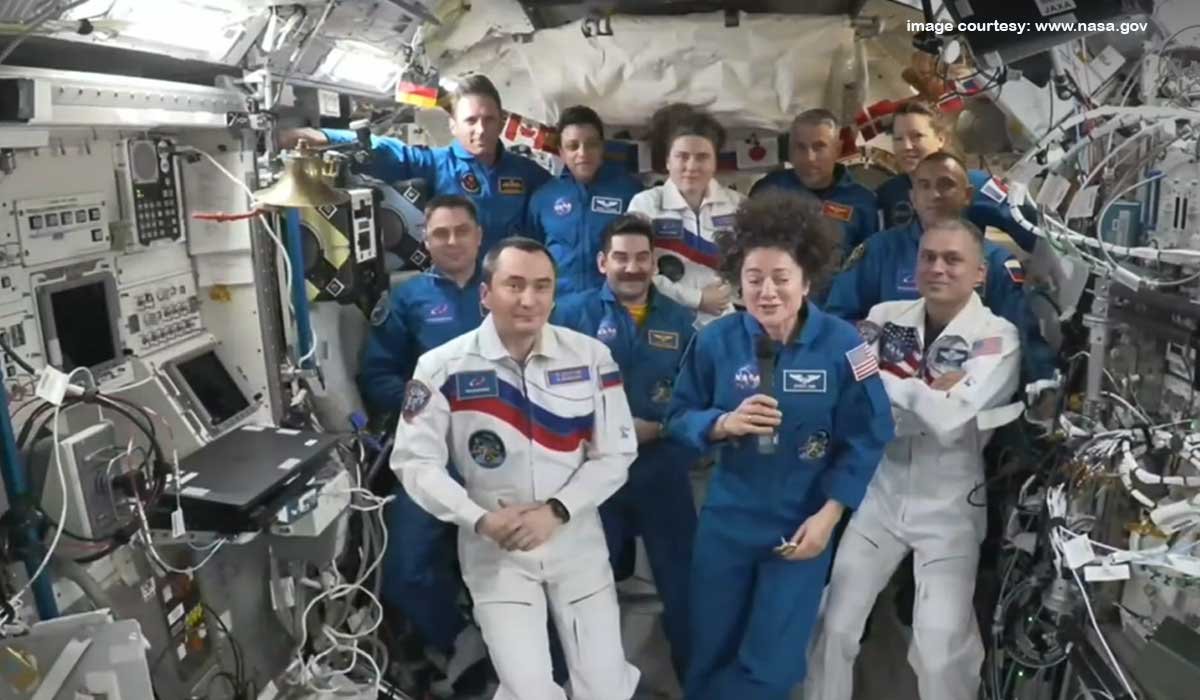
The returning crew members are NASA astronauts Jessica Meir and Jack Hathaway, European Space Agency astronaut Sophie Adenot, and Roscosmos cosmonaut Andrey Fedyaev.
They have been aboard the International Space Station since February 2026, supporting scientific research and station operations. NASA says the mission contributed to research involving areas including medical science, microorganisms, stem cells, bone and muscle health, materials and technologies for future space missions.
Their return also comes as another crew takes over their responsibilities aboard the ISS. NASA’s SpaceX Crew-13 has already arrived, creating a handover period between the two missions.
That handover is important because the International Space Station cannot simply stop operating when one crew goes home. It is a continuously operating research facility, requiring astronauts to maintain systems, conduct experiments and manage the station around the clock.
The technology behind the journey home
The SpaceX Dragon spacecraft is at the centre of Crew-12’s return.
After undocking from the space station, Dragon will begin its journey back toward Earth. The spacecraft must perform a carefully controlled series of manoeuvres before entering Earth’s atmosphere.
NASA’s current schedule calls for the Crew-12 undocking at approximately 8:05 a.m. EDT on October 7, followed by re-entry and splashdown at approximately 11:34 a.m. EDT on October 8.
For New Zealand viewers, the planned splashdown corresponds to approximately 4:34 a.m. on Friday, October 9, New Zealand time, assuming the current schedule remains unchanged.
Of course, spaceflight schedules are never guaranteed until the spacecraft actually returns. Weather, sea conditions, spacecraft readiness and recovery operations can all influence the timing.
That uncertainty is part of what makes human spaceflight so technically demanding.
Why live streaming matters
NASA’s decision to provide extensive live coverage is significant because it allows people around the world to follow the mission almost as it happens.
NASA says its Crew-12 return coverage will include the re-entry and splashdown, with the agency providing coverage through NASA+, YouTube and other platforms.
For younger audiences especially, this kind of access can make space science feel less distant.
Instead of reading about astronauts returning from orbit days later, students can watch the operation unfold, see mission controllers working and understand that space exploration is not simply something that happens in science-fiction movies.
It is real engineering happening in real time.
From government space programmes to commercial space technology
Perhaps the most interesting part of Crew-12 is not simply that astronauts are returning home. It is who is helping make that return possible.
NASA is working with SpaceX through its commercial crew programme, demonstrating a model in which government agencies and private aerospace companies share responsibilities in human spaceflight.
SpaceX’s Dragon spacecraft has become an important part of NASA’s transportation system to and from the International Space Station.
This is a major change from the traditional image of space exploration being controlled entirely by government agencies.
The commercial space industry is now playing a much larger role in launching astronauts, transporting cargo and supporting operations in low Earth orbit.
In my view, this partnership could become one of the most important developments in space technology over the next decade.
The real value is not just reaching space
It is easy to focus on the launch when discussing a space mission.
A rocket launches. The spacecraft reaches orbit. Astronauts arrive at the ISS.
But the bigger technological achievement is the complete cycle: launch, docking, life support, scientific research, undocking, atmospheric re-entry and recovery.
Every successful mission provides engineers and scientists with more information about how humans can safely live and work beyond Earth.
Crew-12’s research is particularly interesting because much of it has potential relevance beyond space.
NASA has highlighted research involving stem cells, cartilage, antibiotic-resistant bacteria, IV fluid production, bone and muscle health and materials produced through 3D printing.
This is why space technology should not always be viewed as something designed only for astronauts.
Some technologies developed or tested for extreme environments can eventually influence healthcare, manufacturing, communications, robotics and other industries on Earth.
What New Zealand can learn from missions like Crew-12
For New Zealand, space technology is becoming increasingly relevant.
The country already has a growing connection with the international space sector, including satellite technology, aerospace development, research and commercial innovation.
Watching missions such as Crew-12 provides an opportunity to think beyond rockets.
Space technology requires expertise in software, artificial intelligence, robotics, electronics, communications, materials science, cybersecurity and data analysis.
That means the space industry is not only for astronauts or rocket scientists.
A young person interested in coding, engineering or technology could potentially contribute to the space sector without ever leaving Earth.
That is perhaps one of the most valuable messages behind missions like Crew-12.
What comes next after Crew-12?
Crew-12’s return is not an ending for the International Space Station. It is part of a continuing cycle.
Crew-13 has now begun its mission aboard the station, while NASA and its partners continue using the ISS as a platform for research and technology development.
NASA has also made clear that research aboard the station supports the longer-term goal of preparing for future human missions beyond low Earth orbit.
The Moon and eventually Mars remain major ambitions.
The technologies tested in low Earth orbit today could therefore become part of the infrastructure needed for much longer journeys tomorrow.
Our view: The return is just as important as the launch
The excitement surrounding a rocket launch is understandable. It is loud, dramatic and visually spectacular.
But Crew-12 reminds us that the return journey is equally important.
Getting four astronauts safely from the International Space Station, through Earth’s atmosphere and into the Pacific Ocean requires an enormous amount of planning, automation, engineering and coordination.
That is where modern space technology really shows its value.
For New Zealand viewers, the Crew-12 splashdown will be an early-morning event, but it may be worth watching — especially for students, technology enthusiasts and anyone interested in where human exploration is heading.
Space exploration is no longer only about going farther.
It is increasingly about developing the technology that allows humans to live, work, research and safely return from space.
And as NASA and commercial partners continue building that capability, missions like Crew-12 may eventually be remembered not just for the astronauts who flew them, but for the technologies and knowledge they helped bring back to Earth.
Disclaimer: Spaceflight schedules can change because of weather, technical conditions and mission requirements. Readers should check NASA’s official channels for the latest timing and live coverage information.
For more stories and opinions on artificial intelligence, space, gadgets and emerging technology, explore the Technology Desk on NZ Indian Insights.