
Severe storms that swept across parts of the United States during the Thanksgiving holiday have left hundreds of thousands of electricity customers without power, while heavy rain, powerful winds and coastal flooding disrupted transport and holiday celebrations.
The storm system affected communities across the eastern United States, with additional severe coastal conditions reported along the West Coast. Utility crews, emergency responders and local authorities faced the challenge of restoring essential services while dealing with damaged infrastructure and hazardous travel conditions.
The weather arrived during one of America’s busiest holiday travel periods, when millions of people were making journeys to visit family and friends.
Related Post




Powerful Winds and Heavy Rain Batter the US East Coast
The eastern United States experienced particularly disruptive weather on Thursday, 26 November 2026, as strong winds, heavy rainfall and rising coastal waters affected several states.
Wind gusts reportedly reached around 70 miles per hour in some areas, creating dangerous conditions for motorists and pedestrians. Strong winds can bring down trees, damage buildings and knock power lines out of service, leaving entire neighbourhoods without electricity.
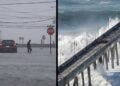
Coastal communities also faced flooding as high tides combined with onshore winds and heavy weather. Some roads and bridges became difficult or unsafe to use, while emergency services responded to incidents involving people caught in floodwater.
The effects extended beyond individual communities. Major urban areas and transport networks experienced disruption, highlighting how quickly severe weather can affect daily life during a national holiday.
Hundreds of Thousands Face Electricity Disruptions
Power outages became one of the most significant consequences of the storm.
Outage monitoring figures reported during Thursday evening indicated that the number of affected electricity customers across the country had approached one million at its peak. By Friday morning, 27 November, hundreds of thousands of customers were still without electricity, although restoration work had reduced the overall total.
Pennsylvania, New Jersey, Maryland and Virginia were among the eastern states reporting substantial disruptions. The precise number of affected customers changed as electricity providers restored connections and additional information became available.
For households, a prolonged power cut can mean losing lighting, heating, refrigeration and access to some essential household equipment. Businesses may also face interrupted operations, damaged stock and lost income.
Older residents, people who depend on electrically powered medical equipment and households with limited alternative heating options can face additional difficulties during extended outages.
Utility companies have been working to assess damage, clear fallen trees and repair electrical infrastructure. However, the speed of restoration can vary significantly between locations, particularly where damaged lines, blocked roads or difficult working conditions delay repairs.
Residents affected by outages should follow updates from their local electricity provider and emergency management authorities rather than relying on national figures alone.
Pennsylvania and Neighbouring States Among the Hardest Hit
Pennsylvania was among the states experiencing major power disruptions as the storm’s effects continued into Friday.
New Jersey and Maryland also faced significant challenges, with strong winds, flooding and infrastructure problems affecting communities across the region. Virginia experienced storm-related disruption as well.
Local conditions differed considerably. Some areas were dealing primarily with fallen trees and electricity failures, while low-lying coastal locations faced the additional threat of rising water.
Officials and utility providers continued restoration efforts as weather conditions began to improve in parts of the affected region.
Even after the strongest winds pass, recovery can take time. Repair crews must inspect damaged equipment, make affected areas safe and restore connections without creating additional risks for workers or the public.
The situation also demonstrates why residents in storm-prone areas are encouraged to prepare for temporary interruptions to essential services before severe weather arrives.
Flights Delayed as Holiday Travel Takes a Hit
The storms caused significant disruption to US air travel during the Thanksgiving holiday period.
Flight-tracking reports recorded thousands of delays and hundreds of cancellations on Thursday. Strong winds, poor weather conditions and flooding affected airport operations and created knock-on delays across the wider aviation network.
Even airports outside the worst-hit areas can experience disruption when aircraft and crew cannot reach their scheduled destinations on time.
Travellers faced longer waits, missed connections and uncertainty over when they could continue their journeys. One widely reported example involved a passenger experiencing an extended wait at New York’s LaGuardia Airport while attempting to travel to Chicago for Thanksgiving.
The disruption was particularly inconvenient because Thanksgiving is traditionally a major time for family gatherings across the United States.
Passengers travelling during severe weather are advised to check their flight status directly with their airline, review rebooking options and allow additional time for airport journeys. Road conditions around airports may also change rapidly when heavy rain and flooding affect nearby routes.
New York’s Thanksgiving Parade Postponed
The severe weather also affected one of New York City’s best-known holiday traditions.
Organisers postponed the city’s annual Macy’s Thanksgiving Day Parade because of the dangerous conditions. The 2026 event had been expected to mark the parade’s 100th edition, making the change particularly significant for organisers, performers and spectators.
Strong winds are a serious safety concern for large outdoor events, especially those involving giant inflatable balloons, temporary structures and large crowds.
Moving an event of this scale requires coordination between organisers, public authorities, performers and transport services. The postponement also affected visitors who had travelled to New York specifically to attend the celebration.
The parade was rescheduled for Saturday, 28 November, according to reports published during the storm’s aftermath.
The disruption served as a reminder that even major annual celebrations can be affected when weather conditions create risks for participants and the public.
Coastal Flooding Raises Safety Concerns
Flooding was another major concern along sections of the US East Coast.
Strong onshore winds and elevated tides pushed water into vulnerable coastal locations, affecting roads, public spaces and low-lying properties. Some communities experienced flooding severe enough to require emergency responses and temporary road closures.
Coastal flooding can occur even when rainfall is not exceptionally heavy. When strong winds push seawater inland at the same time as high tides, the combined effect can raise water levels and overwhelm drainage systems.
In urban areas, floodwater can also conceal damaged road surfaces, open drains and other hazards. Authorities therefore often advise people to avoid flooded roads rather than attempting to drive or walk through them.
New Jersey and other coastal communities faced particularly challenging conditions, with reports describing substantial flooding and disruption to local businesses and homes.
Residents in affected locations should follow evacuation instructions, avoid closed roads and monitor official weather warnings. People living in flood-prone areas may also need to protect important documents, medicines and essential supplies.
Stormy Conditions Also Affect the West Coast
The eastern storm was not the only weather concern facing the United States during the holiday period.
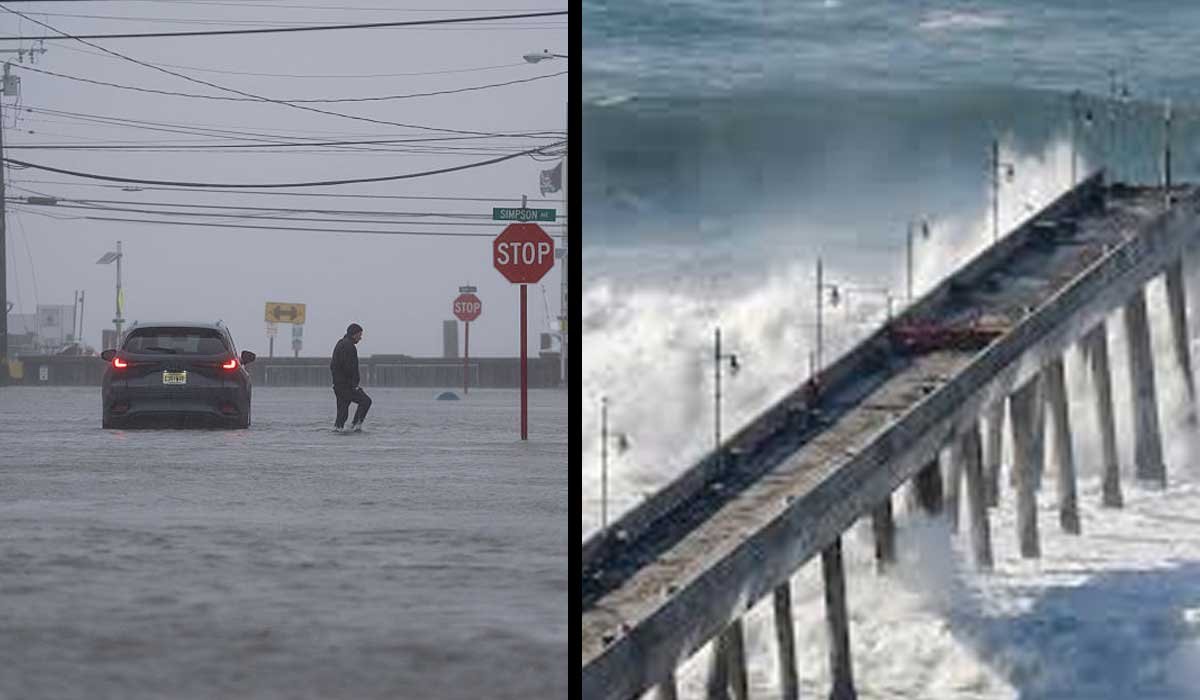
Parts of the West Coast experienced unusually high tides and powerful coastal waves, raising concerns about flooding and damage to shoreline infrastructure.
California communities faced hazardous coastal conditions, while some rail services along the coast were disrupted by problems associated with high tides and washout conditions.
Authorities also urged people to exercise caution around beaches and exposed coastal areas. Powerful waves can reach further inland than expected, sweep people off their feet and create dangerous conditions even for those standing on apparently dry ground.
In Oregon, video circulated showing a man and a dog being swept into the sea during powerful tidal conditions. Both reportedly escaped unharmed, according to police accounts cited in news coverage.
These incidents highlight the importance of respecting coastal warnings and keeping a safe distance from rough seas during periods of elevated tides and strong winds.
What Residents Can Do During Power Cuts and Severe Weather
Severe weather can develop quickly, making preparation important for households and businesses.
Residents in affected areas should keep drinking water, essential medicines, charged mobile phones, flashlights and basic emergency supplies available. A battery-powered radio or a reliable way to receive official alerts can be helpful if internet access or mobile services become unreliable.
During a power outage, people should stay clear of fallen electrical wires and report hazards to the relevant authorities. Portable generators must only be operated outdoors, away from doors and windows, because they can produce deadly carbon monoxide.
Households should also avoid using outdoor cooking equipment indoors as an alternative source of heating or cooking.
For drivers, the safest approach is to avoid flooded roads, respect road closures and postpone unnecessary journeys when conditions are dangerous.
Businesses can reduce disruption by maintaining emergency contact lists, protecting important records and preparing a plan for temporary electricity or internet failures.
Recovery Continues as Communities Assess the Damage
Although conditions were expected to improve in parts of the eastern United States, the recovery process continued beyond the passage of the strongest weather.
Electricity restoration, floodwater clearance, infrastructure inspections and transport recovery all require time. Further local disruptions can persist even after widespread weather warnings have ended.
The Thanksgiving storms have demonstrated how severe weather can affect multiple parts of everyday life at once, from household electricity and local businesses to airports, rail services and major public events.
For affected families, the immediate priority remains staying safe and obtaining reliable information about power restoration and travel arrangements.
As utility crews and emergency services continue their work, residents are encouraged to follow local authority guidance and prepare for the possibility of further disruption where weather hazards remain.
This article is an original news-style rewrite based on publicly reported information. Outage figures and recovery updates are time-sensitive and may change as authorities release new information.