
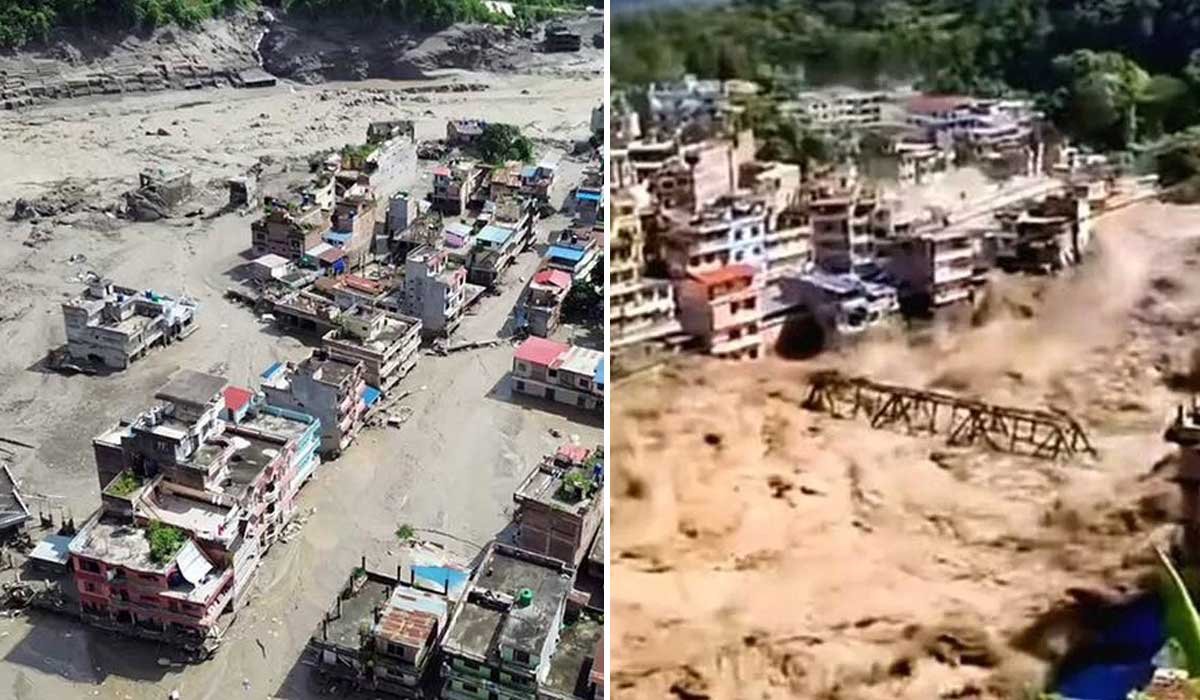
A devastating flash flood struck northern Nepal on 26 August 2026, sweeping through communities near the Nepal–Tibet border and leaving a trail of deaths, destruction and missing people. The disaster hit particularly hard in Rasuwa district, where the Bhote Koshi River suddenly surged through settlements, roads, bridges and infrastructure.
Nepali police had recovered 157 bodies, while reports put the combined death toll in Nepal and Tibet at at least 160. Hundreds of people remain unaccounted for, and authorities warn that the final toll could rise as rescue teams reach areas cut off by the disaster.
What Happened in Nepal?
The flash flood struck the Bhote Koshi River area on Wednesday morning, with the worst destruction reported around Timure, Syapru Besi and other settlements in Rasuwa.
Related Post

The flooding was extremely sudden. Reports from the affected area indicated that there was little or no heavy rainfall locally when the water and debris arrived, leaving residents with very little time to escape.
Homes, vehicles, roads, bridges and other structures were swept away. Several hydropower facilities were also damaged, while communications and electricity infrastructure were disrupted.
The Nepal Army, Nepal Police and Armed Police Force have been deployed for search-and-rescue operations. Helicopters are being used to reach isolated areas, although difficult weather and conditions on the ground have made some operations challenging.

Why Was the Flood So Sudden?
The exact chain of events was initially unclear, but emerging reports indicate that the disaster was linked to a large collapse of ice, rock and debris upstream, which sent a huge volume of material and water into the river system.
The U.S. Geological Survey said preliminary seismic activity initially reported as an earthquake was instead associated with a glacial collapse and debris flow, which produced catastrophic downstream impacts.
Reuters and other reports have similarly described the event as involving a massive landslide or glacial collapse that entered the river and triggered the destructive flood.
The incident highlights the growing risks faced by communities in the Himalayan region, where glaciers, steep mountain terrain and rapidly changing environmental conditions can combine to create sudden hazards.
Hundreds of People Still Missing
One of the biggest concerns following the disaster is the large number of people who remain unaccounted for.
Nepal’s tourism authorities reported hundreds of missing travellers, including a significant number of foreign nationals. Many were travelling through the region for trekking or pilgrimage-related journeys.
According to reports, 133 Indian nationals were among those reported missing, with many believed to have been travelling towards Mount Kailash and the Kailash Mansarovar pilgrimage route. Other missing foreign nationals included people from the United States, Australia, Britain and Canada.
The sudden nature of the flood meant that many travellers and local residents had little warning before the water and debris swept through affected areas.
Major Damage to Roads, Bridges and Power Projects
The disaster has caused extensive damage to Nepal’s infrastructure.
Authorities have reported the destruction or serious damage of numerous bridges and sections of roads. Power projects in the region were also affected, adding another challenge for communities already dealing with disrupted communications and transportation.
The damage is particularly serious because several affected settlements are located in mountainous areas where road access is already difficult.
Rescue teams therefore face the challenge of reaching isolated communities while also dealing with unstable terrain, damaged roads and the possibility of further flooding or landslides.
Tibet Also Hit by the Disaster
The impact was not limited to Nepal.
Across the border in China’s Tibet Autonomous Region, a mudslide struck the Gyirong area, causing additional deaths and leaving hundreds of people missing.
Chinese authorities reported three deaths and 265 people missing following the disaster in the border region. Search-and-rescue operations were also launched on the Tibetan side.
The cross-border impact demonstrates how quickly mountain disasters can affect communities on both sides of the Himalayas.
India Closely Monitoring the Situation
The disaster has also raised concerns in neighbouring India because rivers flowing from Nepal can affect downstream areas.
India has offered humanitarian assistance to Nepal, while authorities in Bihar and Uttar Pradesh have increased monitoring because of possible downstream flood risks.
Indian Prime Minister Narendra Modi also conveyed condolences to Nepal’s Prime Minister and said India was ready to provide humanitarian assistance and support rescue and relief operations.
For families in India waiting for information about relatives travelling through Nepal, the situation remains particularly distressing because many missing-person reports involve tourists and pilgrims.
Rescue Operations Continue
Search-and-rescue teams are working through damaged settlements and debris to locate survivors and recover those who died.
The Nepal Army has deployed helicopters and emergency response teams, while security personnel are working in affected communities. However, rescue operations remain difficult because some areas are inaccessible and helicopters cannot always land safely.
Authorities are also working to establish accurate lists of missing people and verify the identities and nationalities of those affected.
As communications are restored and rescue teams reach more locations, casualty figures may change.
A Warning for the Himalayan Region
The Nepal disaster has renewed concerns about the vulnerability of Himalayan communities to sudden floods, landslides and glacier-related hazards.
The Himalayas contain numerous glaciers, glacial lakes and steep river valleys. A sudden collapse of ice, rock or debris can rapidly increase river levels and send destructive flows downstream.
Experts and disaster authorities have increasingly stressed the importance of early-warning systems, monitoring of high-risk mountain areas and stronger emergency preparedness.
The latest disaster also comes after other major floods and landslides have affected parts of the Himalayan region in recent years, raising questions about how communities can better prepare for increasingly unpredictable mountain hazards.
What Happens Next?
For Nepal, the immediate priority remains saving lives, finding missing people and providing emergency assistance.
The coming days will be crucial as rescue teams enter areas that were initially inaccessible. Authorities will also need to assess the full scale of damage to homes, roads, bridges, power projects and other infrastructure.
Families of missing tourists and residents are waiting for official information, while governments and diplomatic missions are working to verify the status of their citizens.
The disaster is a stark reminder of how quickly conditions can change in the Himalayan region. What began as a sudden movement of ice, rock and water developed into a catastrophe affecting communities, travellers and critical infrastructure across the Nepal–Tibet border.
Disclaimer
This article is based on reports available as of 27 August 2026. The number of deaths, missing people and the extent of infrastructure damage may change as rescue and verification operations continue. Figures reported by different authorities may also vary during the ongoing emergency.