
21 August 2026 | NZ Indian Insights
New Zealand and Thailand have entered a new phase of bilateral relations with the formal launch of a Strategic Partnership in Auckland.
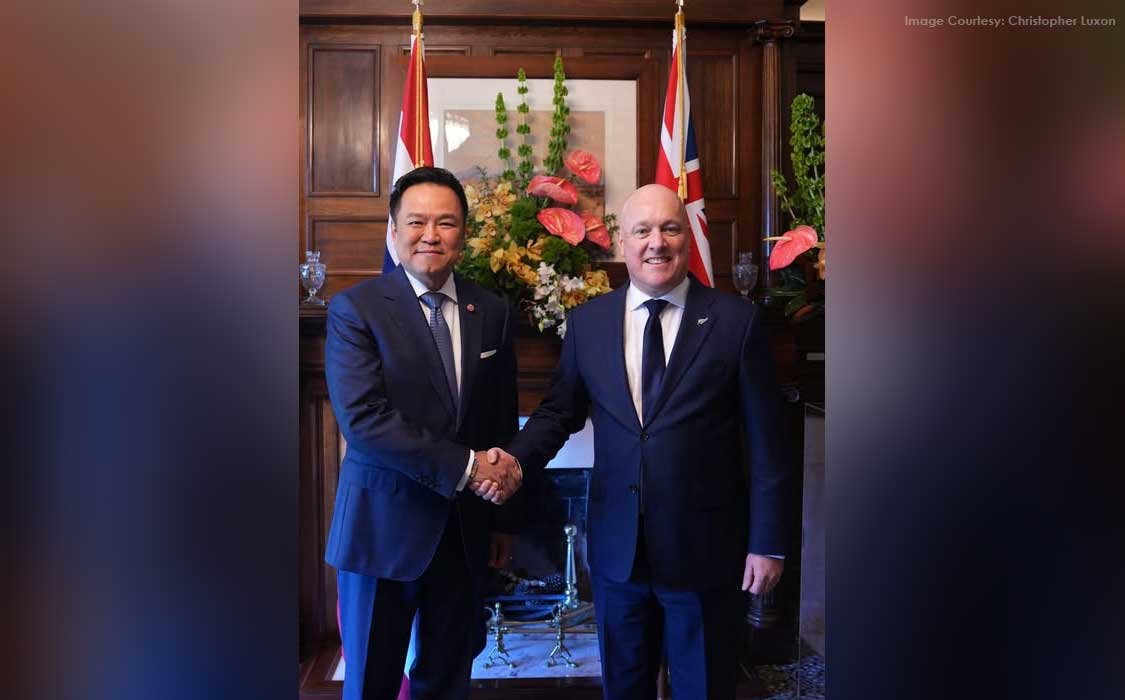
New Zealand Prime Minister Christopher Luxon and Thailand Prime Minister Anutin Charnvirakul formally launched the partnership during the Thai Prime Minister’s visit to New Zealand, establishing a broader framework for cooperation between the two countries.
The agreement builds on more than 70 years of diplomatic relations and focuses on strengthening economic, security, tourism, innovation and people-to-people connections.
Related Post

A new chapter in New Zealand-Thailand relations
The Strategic Partnership marks an important development in the relationship between New Zealand and Thailand.
According to the New Zealand Government, the two countries share a relationship built over seven decades of friendship, trust and connections between their people.
The new partnership is intended to provide a clearer direction for cooperation in areas that are increasingly important to both countries, including trade, regional security, innovation and connectivity.
For New Zealand, Thailand is an important partner in Southeast Asia. Its manufacturing capabilities and regional connections could create opportunities for New Zealand businesses seeking to expand their presence in the region.
Trade ambitions at the centre of the partnership
Trade is one of the major areas of focus under the new Strategic Partnership.
New Zealand and Thailand have set an ambition to triple two-way trade to NZ$13.5 billion by 2045.
The long-term target reflects the governments’ intention to deepen commercial ties and create more opportunities for businesses in both countries.
New Zealand businesses could benefit from stronger connections with Thailand across a range of industries, while Thai companies may also have opportunities to expand their activities in the New Zealand market.
The two governments are also looking at upgrading their existing trade agreement and improving supply-chain resilience.
Thailand as a gateway to ASEAN
A key reason for strengthening the relationship is Thailand’s position within Southeast Asia.
The New Zealand Government says stronger trade arrangements could help more New Zealand businesses access Thailand and use the country as a gateway to the wider ASEAN market.
ASEAN represents a market of more than 600 million consumers, making the region increasingly important for New Zealand’s international trade and economic strategy.
For exporters and companies considering expansion into Southeast Asia, stronger New Zealand-Thailand commercial links could therefore have significance beyond bilateral trade.
The partnership could support greater business engagement, investment and supply-chain connections between New Zealand, Thailand and the wider region.
Direct Thai Airways flights to Auckland expected to return
Tourism and international connectivity are another important part of the announcement.
The two leaders welcomed Thai Airways’ planned resumption of direct flights between Auckland and Thailand in the coming year.
Thai Airways previously served Auckland for more than 30 years before the COVID-19 pandemic interrupted the service.
The planned return of direct flights could provide benefits for both tourism and trade.
For travellers, direct services can make journeys between New Zealand and Thailand more convenient. Bangkok can also provide an important connection point for people travelling onwards to other parts of Asia.
The return of the service is also expected to restore an important air-freight connection, potentially supporting businesses that rely on efficient movement of goods between the two countries.
Tourism and people-to-people connections
Improved air connectivity could contribute to stronger tourism links between New Zealand and Thailand.
Thailand is a major international tourism destination, while New Zealand continues to attract visitors from across Asia and other parts of the world.
More convenient direct flights can support tourism operators, airlines, hospitality businesses and other sectors connected to international travel.
Beyond tourism, the Strategic Partnership also places emphasis on people-to-people links.
These connections can include business relationships, educational exchanges, cultural engagement and other interactions that strengthen understanding between communities.
Stronger cooperation on security
The new partnership also extends beyond trade and tourism.
New Zealand and Thailand have agreed to strengthen cooperation on border security, customs, immigration and cyber security.
The countries will also work together on challenges involving scam centres, human trafficking and drug trafficking.
Cross-border crime and online scams have become significant concerns across the Asia-Pacific region. Greater cooperation between countries can help authorities share information and coordinate responses to these challenges.
The New Zealand Government says the strengthened cooperation is intended to help keep New Zealanders safer both at home and abroad.
Focus on cyber security and emerging challenges
Cyber security is another area included in the new cooperation framework.
As businesses, governments and communities increasingly rely on digital systems, cyber threats have become an international issue rather than one confined to individual countries.
Closer cooperation between New Zealand and Thailand could support efforts to address cyber-related threats and improve coordination between relevant agencies.
This is particularly important as economic and people-to-people connections between the two countries grow.
Joint Plan of Action 2026-2030
As part of the new Strategic Partnership, the two countries have welcomed a Joint Plan of Action covering 2026 to 2030.
The plan provides a framework for practical cooperation across several major areas.
These include:
- Political and security cooperation
- Trade and innovation
- People-to-people links
- Regional and multilateral cooperation
The Joint Plan of Action gives the partnership a longer-term structure and identifies areas where New Zealand and Thailand can work together over the next several years.
Why the partnership matters for New Zealand
The Strategic Partnership could have implications for several parts of New Zealand’s economy and international engagement.
For exporters and businesses, stronger trade ties could create new opportunities in Thailand and the wider ASEAN region.
For tourism operators, the planned return of direct Auckland flights could improve visitor connectivity.
For travellers, direct flights could make journeys between New Zealand and Thailand easier and more convenient.
For security agencies, increased cooperation could strengthen efforts against organised crime, trafficking, cyber threats and other cross-border challenges.
For New Zealand’s wider regional strategy, closer engagement with Thailand strengthens the country’s relationships in Southeast Asia.
Opportunities for New Zealand businesses
Thailand’s manufacturing capacity and regional position could be particularly relevant for New Zealand companies looking to grow internationally.
The New Zealand Government has identified opportunities arising from Thailand’s scale, manufacturing capabilities and regional connections.
An upgraded trade relationship and stronger supply-chain cooperation could potentially make it easier for more New Zealand businesses to engage with the Thai market.
Small and medium-sized businesses may also benefit if improved trade connections reduce barriers and create more opportunities to establish commercial relationships.
However, individual businesses will still need to assess market conditions, regulations, costs and demand before entering Thailand or other ASEAN markets.
Strengthening New Zealand's connection with Southeast Asia
The partnership comes at a time when Southeast Asia continues to play an important role in New Zealand’s economic and regional relationships.
Thailand’s location and connections across ASEAN make it an important partner for New Zealand.
By strengthening bilateral ties, New Zealand can build closer relationships with a country that has significant economic, manufacturing and regional capabilities.
The new partnership also creates opportunities for cooperation on issues that go beyond economics, including security, cyber security, regional cooperation and people-to-people connections.
What happens next?
The launch of the Strategic Partnership establishes the framework, but its long-term impact will depend on how the commitments are implemented.
The Joint Plan of Action for 2026-2030 provides a roadmap for cooperation, while the trade ambition sets a longer-term economic goal.
The planned return of Thai Airways services will also provide a practical boost to connectivity between the two countries.
Over time, businesses, travellers, students, communities and government agencies could all contribute to strengthening the relationship.
A stronger partnership for the years ahead
The formal launch of the New Zealand-Thailand Strategic Partnership represents a significant step in the relationship between the two countries.
With more than 70 years of diplomatic ties already providing a strong foundation, the new partnership aims to build deeper cooperation around trade, tourism, security, innovation and regional engagement.
The ambition to increase two-way trade to NZ$13.5 billion by 2045, plans to strengthen the existing trade relationship, the expected return of direct Thai Airways flights and expanded security cooperation all point towards a broader and more connected relationship.
For New Zealand, closer engagement with Thailand could open new commercial and regional opportunities while strengthening connections with Southeast Asia.
For Thailand, the partnership provides another avenue for deeper economic, tourism, security and people-to-people engagement with New Zealand.
As the Joint Plan of Action 2026-2030 moves forward, the coming years will show how effectively the two countries can translate the new partnership into practical outcomes for businesses, communities and people.
Disclaimer: This article is intended for general news and information purposes. NZ Indian Insights has independently rewritten and presented the information based on the official New Zealand Government announcement. Readers should refer to official government sources for the latest information and developments.
For more New Zealand, global and international news updates, visit NZ Indian Insights.
FAQs
What is the New Zealand-Thailand Strategic Partnership?
It is a new framework designed to strengthen cooperation between New Zealand and Thailand across trade, security, innovation, tourism, people-to-people links and regional affairs.
What is the New Zealand-Thailand trade target?
The two countries have an ambition to triple two-way trade to NZ$13.5 billion by 2045.
Will Thai Airways resume direct flights to Auckland?
Thai Airways is planning to resume direct flights between Auckland and Thailand in the coming year.
What security areas will New Zealand and Thailand cooperate on?
Cooperation will cover border security, customs, immigration and cyber security, as well as efforts to address scam centres, human trafficking and drug trafficking.
What is the Joint Plan of Action 2026-2030?
It is a framework for cooperation covering political and security relations, trade and innovation, people-to-people links, and regional and multilateral cooperation.