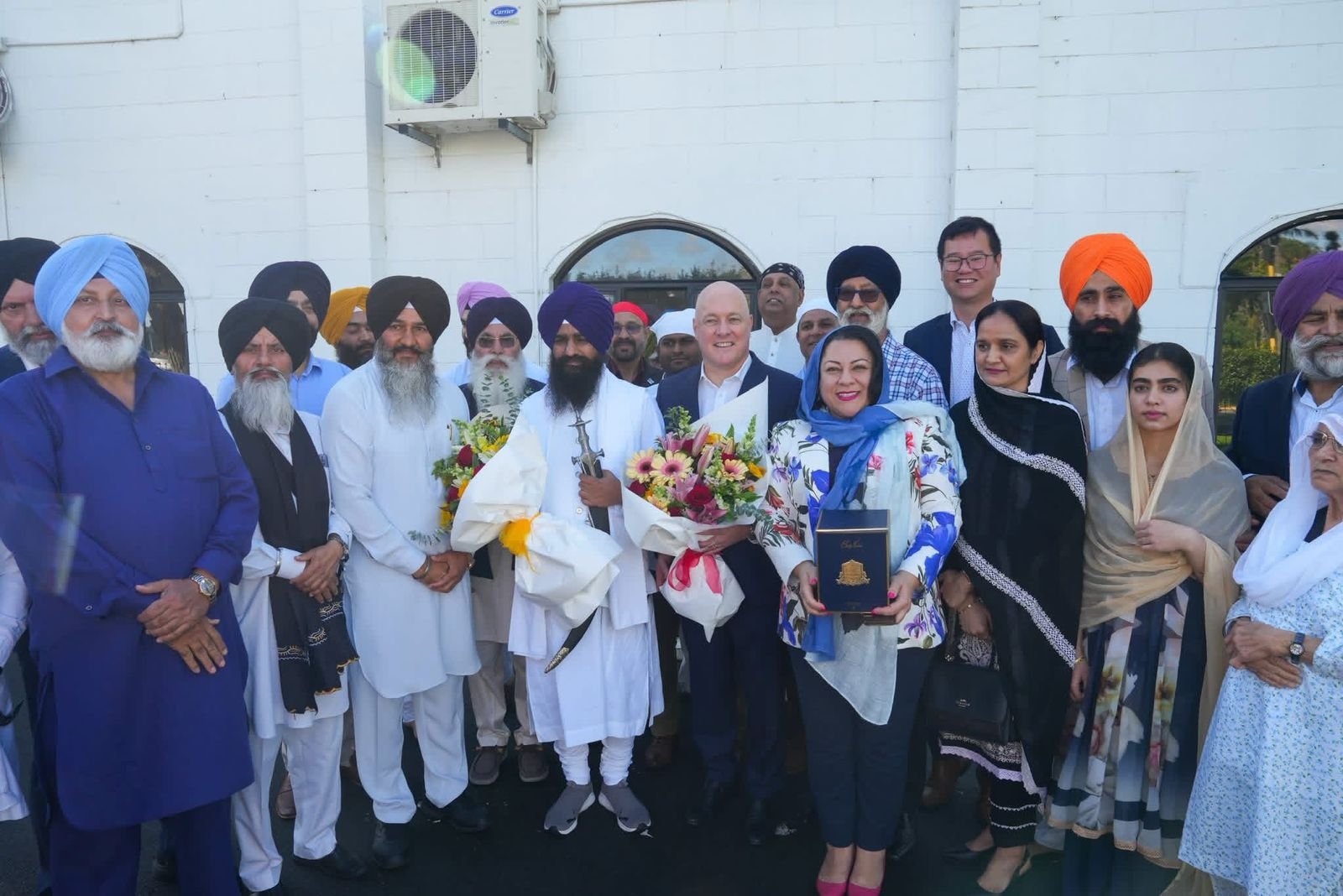
A Moment That Reflects New Zealand’s Multicultural Strength
When Christopher Luxon met Giani Kuldip Singh Gargajj at the Guru Nanak Sikh Sangat Gurdwara in Auckland, it wasn’t just a routine political visit it symbolised something deeper.
In a country known for its cultural diversity, this interaction highlighted the growing recognition of the Sikh community’s role in shaping modern New Zealand. It also showed how leadership engagement can strengthen trust and unity across communities.
According to reports, discussions focused on harmony, inclusivity, and the contributions of Sikhs to New Zealand’s development.
Why This Meeting Matters More Than It Appears
At first glance, such meetings may seem ceremonial. But in today’s global climate where identity, migration, and belonging are often debated moments like these carry real significance.
New Zealand is home to a rapidly growing Sikh population. From business and transport to healthcare and community service, Sikh contributions are visible across multiple sectors. Recognising this publicly sends a strong message: contribution matters more than background.
The meeting also reflects the importance of acknowledging minority communities in building a cohesive and inclusive society.
Sikh Community Values Driving Positive Change in New Zealand
One of the most powerful aspects of the Sikh community is its core principle of seva (selfless service). This value is not just philosophical it is actively practiced.
From organising food drives to supporting communities during challenging times, Sikh organisations in New Zealand consistently contribute to social welfare. Events like langar (community kitchens) have become symbols of inclusivity, where people from all backgrounds are welcome.
Recognition of these efforts is an important step in strengthening community relationships and appreciation.
A Step Toward Deeper Cultural Understanding
New Zealand prides itself on being inclusive, but true inclusivity goes beyond policy it requires ongoing dialogue.
This meeting reflects an effort to strengthen understanding between cultures. Conversations reportedly focused on promoting mutual respect and cooperation among different communities living in New Zealand.
Such engagement is essential in ensuring that diversity continues to be a strength rather than a challenge.
Symbolism That Goes Beyond Politics
There were also meaningful gestures exchanged during the meeting, reflecting cultural respect and goodwill.
But beyond these gestures lies a bigger message:
New Zealand’s leadership is willing to engage directly with communities, listen to their perspectives, and acknowledge their role in the country’s progress.
That kind of leadership builds trust and trust builds stronger societies.
Our Perspective: More Than Just a Visit
From an opinion standpoint, this meeting represents a positive direction for New Zealand’s multicultural future.
However, recognition should not stop at symbolic meetings. The real impact will depend on what follows:
- Continued engagement with diverse communities
- Policies that reflect inclusivity
- Support for cultural and religious freedoms
If these steps follow, moments like this will not just be headlines — they will become meaningful progress.