
India’s Unsung Heroes Series
India’s history of innovation is filled with remarkable people whose ideas shaped industries, improved everyday life and inspired generations. Yet, many of these innovators remain relatively unknown outside specialist circles.
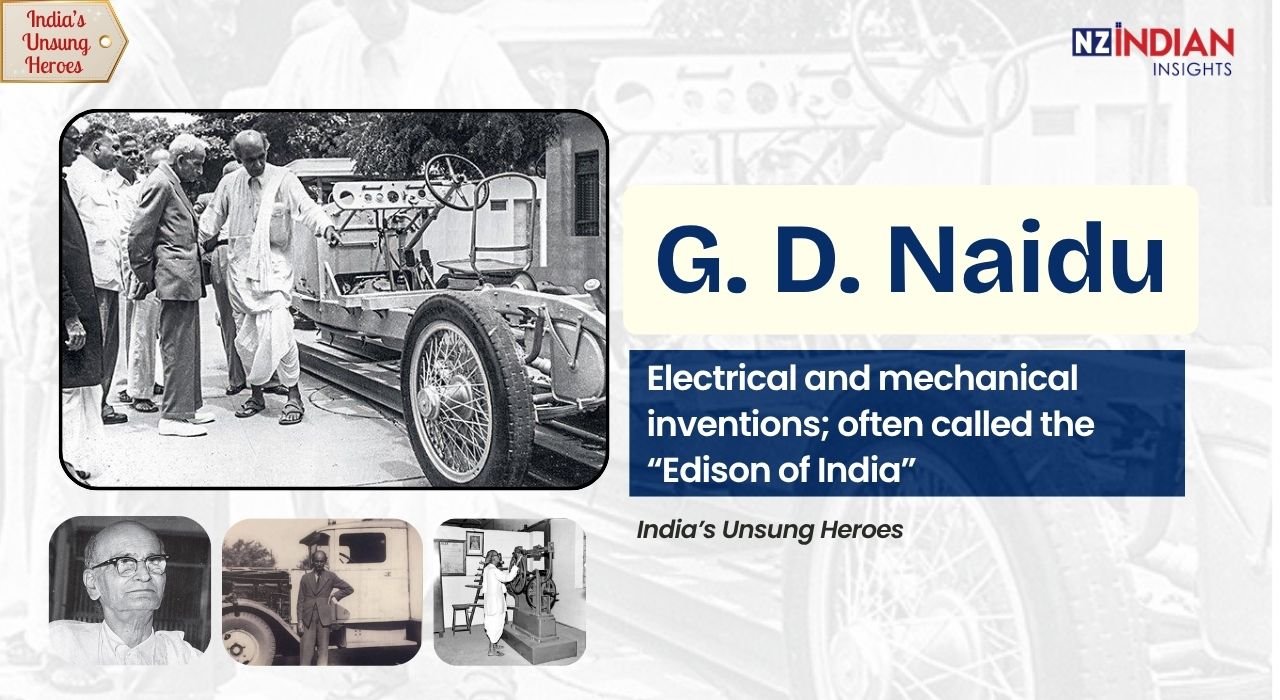
One such name is Gopalswamy Doraiswamy Naidu, better known as G. D. Naidu.
An engineer, inventor, entrepreneur and self-taught innovator from Tamil Nadu, Naidu became known for his work across electrical and mechanical engineering. His curiosity about machines began at a young age and eventually developed into a lifelong passion for invention.
Related Post
Often described as the “Edison of India,” G. D. Naidu demonstrated that innovation does not always begin inside a large laboratory or university. His story is one of experimentation, persistence and an extraordinary willingness to understand how things worked.
Who Was G. D. Naidu?
G. D. Naidu was born in 1893 in Kalangal, near Coimbatore, Tamil Nadu.
Unlike many famous scientists and engineers of his time, Naidu did not follow a conventional academic path. His practical approach to learning played an important role in shaping his career.
He was fascinated by machinery and technology and spent much of his life experimenting with electrical and mechanical systems.
His journey also coincided with a period when India was experiencing significant technological and industrial change. Rather than simply importing technology, Naidu was interested in understanding, adapting and developing machines himself.
From Curiosity to Engineering
One of the most interesting aspects of Naidu’s story is his largely self-taught approach to engineering.
He developed his technical knowledge through observation, experimentation and practical experience. This hands-on mindset became a defining feature of his work.
His interest was not limited to one particular invention. Instead, he explored a wide range of technologies, including:
- Electrical equipment
- Motors and machinery
- Radio technology
- Mechanical devices
- Agricultural equipment
- Automotive technology
- Industrial engineering
This wide-ranging curiosity helped establish Naidu as one of India’s notable early industrial innovators.
The Motor That Showed His Engineering Skills
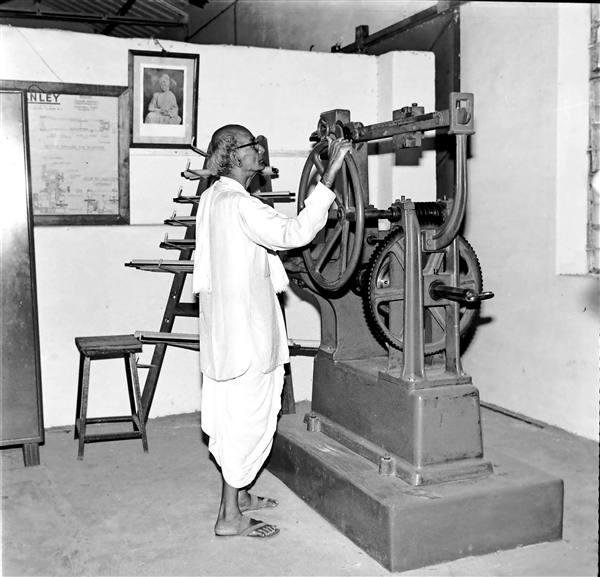
Naidu became particularly associated with electrical engineering and motor technology.
He worked on the development and improvement of electric motors and related equipment, demonstrating his ability to translate engineering concepts into practical machines.
At a time when electrical technology was still developing rapidly in India, this kind of experimentation was significant.
His work reflected an important principle that would later become central to modern engineering: technology should not only be understood theoretically but should also solve real-world problems.
Innovation Beyond a Single Invention
G. D. Naidu’s legacy cannot easily be reduced to one invention.
Instead, his contribution lies in the breadth of his experimentation and his efforts to encourage indigenous technological development.
He worked on various mechanical and electrical devices and showed an interest in improving machines so they could be more useful and practical.
His inventions and experiments included work related to electrical devices, machinery, radios, agricultural technology and automobiles.
This makes his story particularly relevant to the idea of an “unsung hero.” Naidu was not simply interested in creating something for recognition. He developed a culture of experimentation that influenced engineering and industrial activity in his region.
His Interest in Automobiles
Naidu also had a strong interest in automobiles and mechanical engineering.
He studied vehicle technology and became involved in automotive-related manufacturing and experimentation.
His interest in automobiles reflected his broader philosophy: instead of accepting technology as something that had to be imported, Indian engineers could study it, understand it and develop their own solutions.
This attitude was particularly significant during the early decades of India’s industrial development.
Building an Innovation Culture in Coimbatore
Naidu’s influence extended beyond his individual inventions.
He became an important figure in the development of Coimbatore’s engineering and industrial culture.
Coimbatore eventually developed a reputation as an important manufacturing and engineering centre in India. Naidu was among the early industrialists and innovators who helped demonstrate the possibilities of engineering-led enterprise in the region.
His work connected invention with entrepreneurship, manufacturing and technical education.
For Naidu, engineering was not simply about creating machines. It was also about creating an environment where people could learn, experiment and build.
A Passion for Practical Education
Another important part of Naidu’s legacy was his interest in technical education.
He believed that young people needed opportunities to gain practical knowledge rather than relying entirely on theoretical learning.
His institutions and educational initiatives reflected this philosophy.
He encouraged students to understand how machines functioned by working with them directly. This approach remains highly relevant today, particularly as countries increasingly emphasise STEM education, vocational training and practical innovation.
Why Was He Called the “Edison of India”?
The comparison with Thomas Edison came from Naidu’s extraordinary interest in invention and his wide-ranging experimentation.
Like Edison, Naidu explored different areas of technology rather than concentrating on only one narrow discipline.
However, the comparison should not obscure what made Naidu unique.
He developed his own identity as an Indian inventor working in a period when technological infrastructure and industrial opportunities in India were still developing.
His story is therefore not simply about the number of things he invented. It is about his determination to demonstrate that Indians could become creators and builders of technology.
A Legacy That Goes Beyond Machines
Perhaps the most important lesson from G. D. Naidu’s life is that innovation is not always about creating a world-changing product overnight.
Innovation can also mean:
Observe → Experiment → Improve → Build → Share
Naidu followed this mindset throughout his life.
He saw problems as opportunities to experiment and treated machines as things that could be understood rather than simply used.
That attitude is especially valuable for today’s young people, entrepreneurs and aspiring engineers.
Why G. D. Naidu Matters Today
More than a century after Naidu began experimenting with technology, his philosophy remains relevant.
Today’s innovators have access to advanced laboratories, artificial intelligence, robotics, 3D printing and powerful computing tools. Yet the fundamental process of innovation has not changed.
Curiosity still comes first.
Naidu’s life reminds us that technological progress requires people willing to ask:
“Can this be made better?”
For Indian communities around the world, including Indians living in New Zealand, stories like Naidu’s provide an opportunity to connect with a lesser-known part of India’s scientific and industrial history.
His story also challenges the idea that innovation belongs only to famous scientists whose names appear in textbooks.
Sometimes, the most inspiring innovators are the ones whose contributions deserve to be remembered more widely.
The Lesson for the Next Generation
G. D. Naidu’s story offers several lessons for young innovators:
Curiosity matters
You do not need to know everything before you start experimenting. Curiosity can be the beginning of learning.
Practical knowledge is powerful
Understanding how something works by building and testing it can be as valuable as studying the theory behind it.
Innovation needs persistence
Many ideas fail before they succeed. Experimentation requires patience and a willingness to learn from mistakes.
Technology should solve problems
The most meaningful innovations often begin with a practical question: how can people’s lives, work or communities be improved?
Background does not define potential
Naidu’s journey demonstrates how determination and self-directed learning can open doors to engineering and innovation.
Remembering an Indian Engineering Pioneer
G. D. Naidu belonged to a generation that helped lay the foundations for India’s technological and industrial development.
His work across electrical and mechanical engineering, his entrepreneurial activities and his commitment to practical education made him a distinctive figure in India’s history of innovation.
Yet outside Tamil Nadu and engineering circles, his name is not always as widely recognised as it deserves to be.
That is precisely why his story belongs in the “India’s Unsung Heroes” series.
G. D. Naidu was more than an inventor. He represented a mindset — learn by doing, question what exists and keep searching for a better solution.
His legacy reminds us that India’s innovation story has never been limited to a handful of famous names.
There are many more stories waiting to be told.
FAQs
Who was G. D. Naidu?
G. D. Naidu was an Indian engineer, inventor and entrepreneur from Tamil Nadu who became known for his work in electrical and mechanical engineering.
Why was G. D. Naidu called the “Edison of India”?
He earned this comparison because of his wide-ranging interest in invention, engineering and technology, along with his numerous experiments and innovations.
What was G. D. Naidu known for?
He was associated with a wide range of electrical and mechanical innovations, including work involving motors, machinery, radio technology, automobiles and agricultural equipment.
What can young people learn from G. D. Naidu?
His life highlights the importance of curiosity, practical learning, experimentation, persistence and using technology to solve real-world problems.
ndia’s innovation history is much larger than the names most people know.
G. D. Naidu’s journey from a self-taught enthusiast to a respected inventor and industrial pioneer shows what can happen when curiosity is combined with determination.
His story deserves to be remembered not only as part of India’s engineering history but also as an inspiration for the next generation of innovators.
India’s Unsung Heroes is a series celebrating the people whose ideas, courage and persistence helped shape India’s journey – often without receiving the recognition they deserved.
Disclaimer: This article is intended for educational and informational purposes. Historical accounts of inventions, achievements and contributions may vary across sources. Readers are encouraged to consult authoritative historical and institutional records for detailed research.