Artificial Intelligence (AI) is no longer something we talk about as “coming soon.” In 2026, it has already become part of everyday life. From the way businesses operate to how people shop, communicate, and even make decisions, AI is shaping the modern world faster than ever before.
Whether it’s customer support chatbots answering questions instantly, AI tools helping create content, or smart systems improving healthcare services, AI is now deeply connected to both work and daily living.
This rapid growth brings one big question: Is AI taking jobs away, or is it creating better opportunities?
The reality is that it’s doing both.
How AI Is Transforming the Global Workforce
AI is changing the way work gets done across almost every industry. Companies are using automation to handle repetitive tasks, reduce manual errors, save time, and improve productivity.
This allows businesses to focus more on strategy, growth, and customer experience rather than routine operations.
Industries already seeing major AI disruption include:
- Customer service through AI chatbots and virtual assistants
- Content creation with AI writing, editing, and design tools
- Manufacturing using robotics and smart automation
- Healthcare with AI-powered diagnostics and patient data analysis
- Finance through faster reporting and fraud detection systems
This shift does not always mean job loss it often means job transformation.
The workplace is evolving, and the ability to adapt is becoming one of the most valuable professional skills.
Jobs at Risk: Which Roles Are Most Vulnerable?
Some roles are more vulnerable to AI than others, especially jobs that involve repetitive, predictable, and rule-based tasks.
High-risk roles include:
- Data entry and administrative positions
- Basic customer support jobs
- Routine accounting and payroll processing
- Repetitive manufacturing and assembly line work
- Standard scheduling and documentation tasks
AI systems can often complete these tasks faster, more accurately, and at a lower cost.
For professionals working in these areas, the message is clear: reskilling is no longer optional—it is necessary.
New Opportunities Created by AI
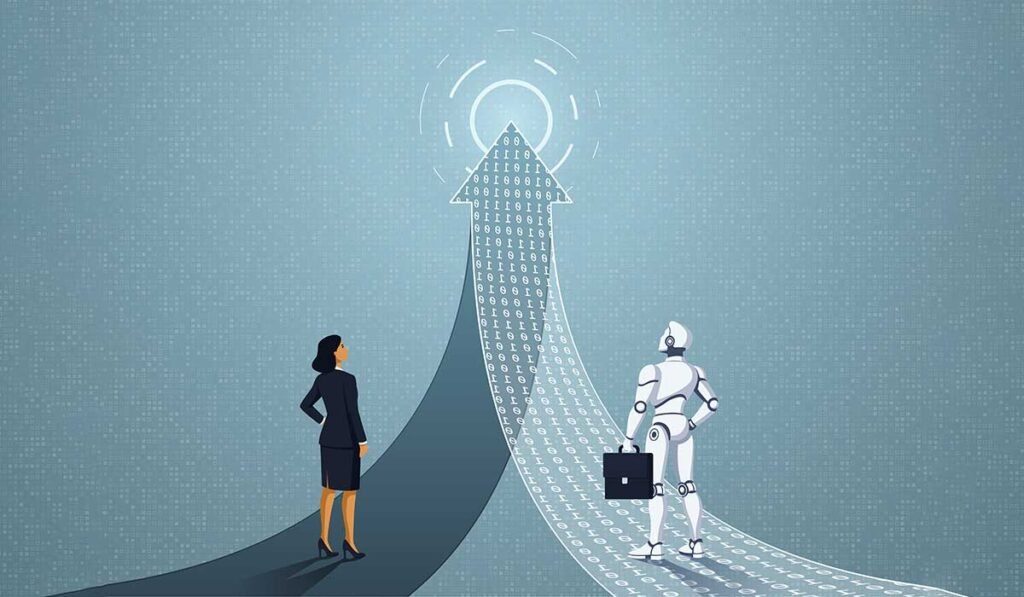
While some jobs are declining, AI is also creating entirely new career paths that did not exist a few years ago.
Businesses now need people who can work alongside AI systems, manage them, improve them, and use them strategically.
Growing AI-driven careers include:
- AI engineers and machine learning specialists
- Data analysts and data scientists
- Digital marketers using AI automation
- Prompt engineers and AI content creators
- Cybersecurity professionals focused on AI systems
- Product managers for AI-powered platforms
This is especially important for students, migrants, and professionals seeking international career growth. Learning AI-related skills can improve employability and open doors in global job markets.