
Skyscrapers are more than concrete and steel — they are powerful symbols of ambition, innovation, and economic strength. From the Middle East to East Asia, the race to build higher continues to reshape city skylines. The world’s tallest buildings are engineering masterpieces that reflect global competition, tourism appeal, and national pride.
Here’s a closer look at the five tallest buildings in the world and what makes them stand out.
1. Burj Khalifa – Dubai, UAE
Height: 828 meters
Floors: 163




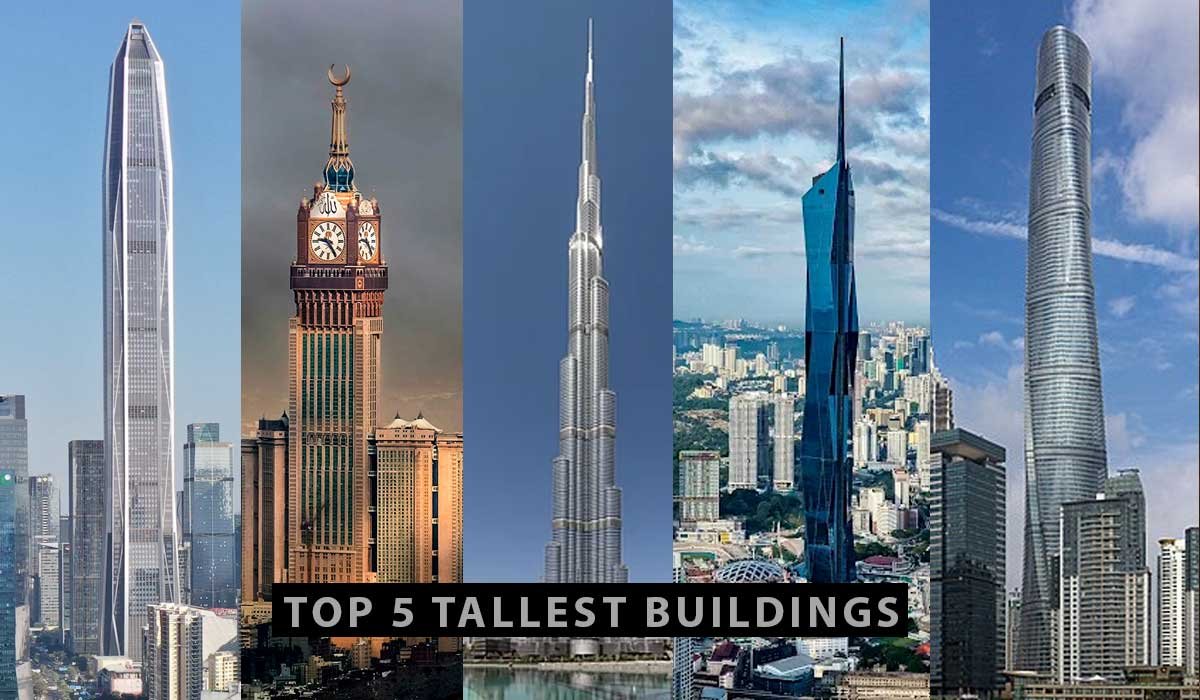
Standing tall since 2010, the Burj Khalifa remains the undisputed tallest building in the world. Designed by architect Adrian Smith, the tower is inspired by Islamic architecture and the Hymenocallis flower.
Beyond its record-breaking height, it houses luxury residences, corporate offices, and the world-famous Armani Hotel. Its observation decks attract millions of tourists each year, reinforcing Dubai’s image as a futuristic global hub.
More than a decade later, no building has surpassed it — a testament to its extraordinary design and structural achievement.
2. Merdeka 118 – Kuala Lumpur, Malaysia
Height: 678.9 meters
Floors: 118
Completed recently, Merdeka 118 has quickly become the second-tallest building in the world. The name “Merdeka” means independence, reflecting Malaysia’s historic independence declaration site nearby.
The tower’s diamond-shaped facade is both symbolic and modern. It features offices, retail spaces, and a hotel, strengthening Kuala Lumpur’s position on the global financial map.
Its sharp spire and contemporary design make it one of the most visually striking skyscrapers in Asia.
3. Shanghai Tower – Shanghai, China
Height: 632 meters
Floors: 128
China’s tallest building, Shanghai Tower, represents the country’s rapid economic rise. Its unique twisting design reduces wind load and increases energy efficiency — making it one of the most environmentally advanced skyscrapers globally.
Located in Shanghai’s financial district, it houses offices, hotels, and observation decks. The tower is also known for having one of the fastest elevators in the world.
It symbolizes China’s push toward sustainable and high-tech urban development.
4. Abraj Al-Bait Clock Tower – Mecca, Saudi Arabia
Height: 601 meters
Floors: 120
Overlooking the holy city of Mecca, the Abraj Al-Bait Clock Tower serves millions of pilgrims annually. It is part of a government-owned complex that includes hotels and prayer facilities.
The massive clock face – one of the largest in the world – is visible from kilometers away. Beyond its height, its cultural and religious significance makes it unique among the world’s tallest structures.
It blends architectural grandeur with spiritual importance.
5. Ping An Finance Center – Shenzhen, China
Height: 599 meters
Floors: 115
Located in one of China’s fastest-growing cities, the Ping An Finance Center reflects Shenzhen’s transformation into a financial powerhouse.
Primarily used for offices, it supports China’s booming tech and finance sectors. Its sleek, modern design complements the rapidly evolving skyline of the city.
Though slightly shorter than the others, it firmly holds its place among the world’s tallest architectural achievements.
Why the Race for Height Continues
The competition to build taller skyscrapers is driven by prestige, tourism, urban density, and economic influence. Countries use these structures to showcase technological capability and global relevance.
While height captures headlines, sustainability and smart building technology are increasingly becoming the real focus. Future skyscrapers are likely to balance extreme height with energy efficiency and environmental responsibility.
FAQs
1. Which is currently the tallest building in the world?
The Burj Khalifa in Dubai holds the title at 828 meters.
2. Which country has the most buildings in the top 5 list?
China appears twice with Shanghai Tower and Ping An Finance Center.
3. Is any building under construction taller than Burj Khalifa?
Several mega-projects have been announced globally, but as of now, none have officially surpassed Burj Khalifa’s height.
4. Why are most tallest buildings located in Asia and the Middle East?
Rapid urbanization, strong economic growth, and government-backed mega-projects have fueled skyscraper development in these regions.
Disclaimer
This article is for informational and editorial purposes only. Building heights and rankings are based on publicly available architectural data at the time of writing. Future construction developments may alter global rankings.
Read more global updates and breaking tech developments from around the world.