

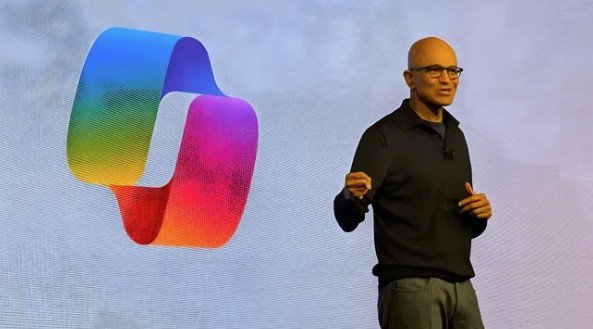
Microsoft’s chief executive, Satya Nadella, recently shared his outlook on the future of artificial intelligence in a high‑profile blog post that has caught the attention of tech watchers worldwide. What’s unusual? Some analysts and AI tools suggest the forward‑looking commentary might itself have been shaped or drafted by AI software – particularly Microsoft Copilot– prompting fresh discussions about the boundary between human leadership and machine‑generated content.
In the year‑end reflection, Nadella paints an ambitious picture of AI as an engine of innovation across industries. Yet critics describe the writing as highly generic and branded with classic AI‑style language – polished, buzzword‑rich, and arguably lacking a personal human voice that normally distinguishes a CEO’s narrative. Copilot, when asked to assess the text, indicated that the post could plausibly be authored by either a human executive or an advanced AI model.
This isn’t just about the style of words – the reaction highlights a broader debate in big tech: how much should leaders rely on AI to help craft their messages? While AI can boost productivity and streamline communication, some experts argue that over‑dependence could dilute authenticity and weaken leadership signals.




Furthermore, observers note that the post avoided commentary on some of Microsoft’s 2025 challenges, including customer pushback against certain AI features and criticism of AI integration in core products. This omission has further fueled speculation about the role AI played – if any – in shaping the narrative.
As artificial intelligence becomes ever more embedded in creative and strategic workflows, tech leaders around the world are wrestling with how to balance intelligent assistance with genuine insight. Nadella’s latest blog – however it was composed – is now at the center of that conversation.
FAQs:
Did Copilot literally write Satya Nadella’s AI vision blog post?
There’s no confirmation from Microsoft that Copilot authored the post. However, AI analysis tools — including Copilot itself — have suggested the text’s tone and structure resemble AI‑generated content, fueling speculation.
Why does this matter for tech leaders?
The situation highlights a broader concern: as AI becomes better at drafting polished communication, distinguishing between human insight and AI assistance could become harder especially in leadership messaging.
Is this unique to Microsoft?
No. Many companies are experimenting with AI content tools for productivity – from drafting internal memos to public communication. The key industry discussion revolves around where to draw the line between assistance and replacement.
Should readers trust AI‑assisted leadership messages?
AI can enhance clarity and efficiency, but messages that rely too heavily on machine generation may lack nuance and context. Critical evaluation remains essential
Disclaimer
This article is an original news summary created by NZ Indian Insights. It draws on publicly reported information and tech commentary to present a balanced view. It is not a reproduction of any original source content but an independent interpretation for informational purposes.