

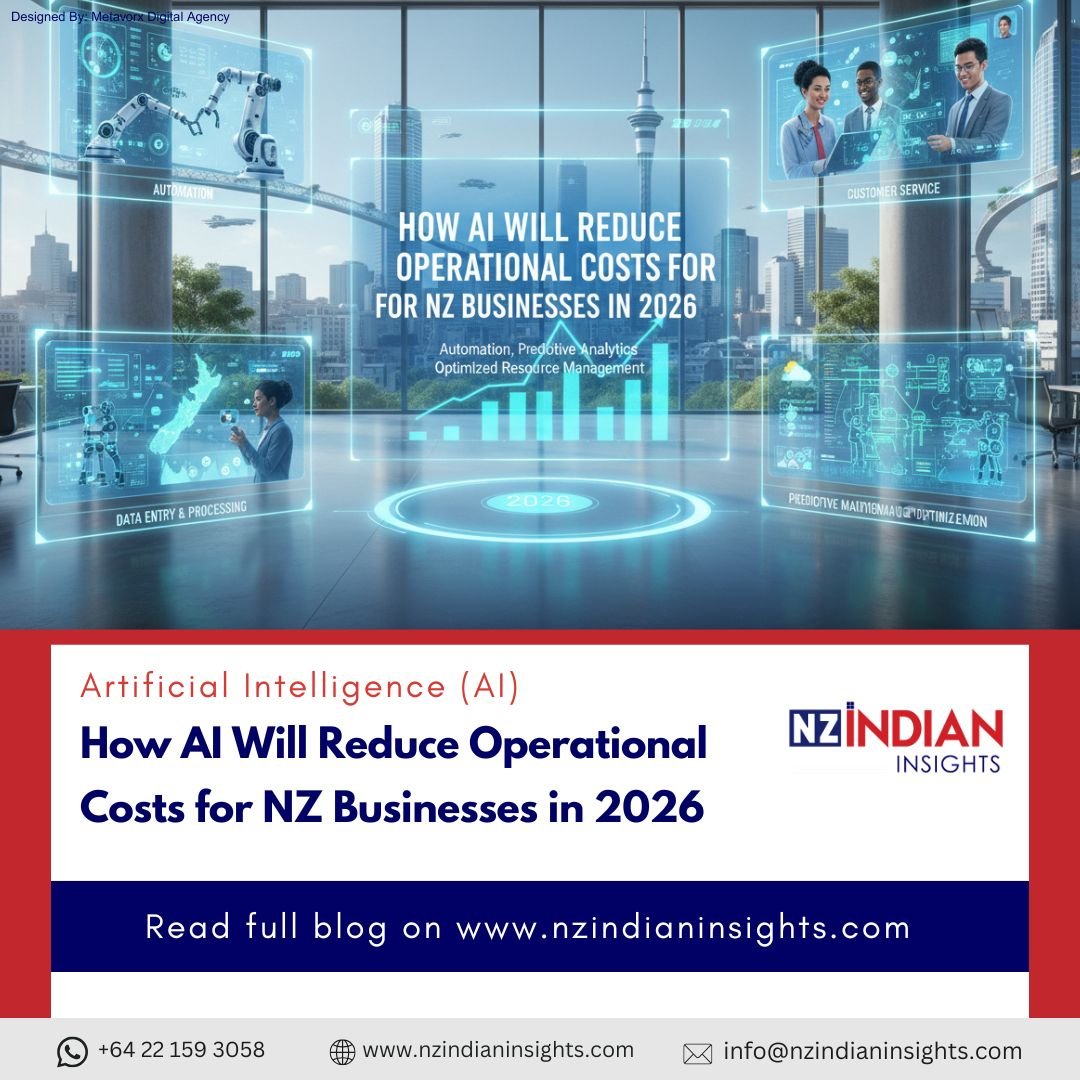
Artificial Intelligence (AI) is no longer just a competitive advantage-it is quickly becoming a cost-saving necessity. As New Zealand businesses prepare for 2026, AI-driven tools are expected to significantly reduce operational expenses across industries, from retail and logistics to finance and healthcare.
With rising labour costs, supply chain pressures, and increasing customer expectations, AI offers NZ businesses smarter, faster, and more efficient ways to operate.
Why Cost Reduction Is a Priority for NZ Businesses
New Zealand businesses face unique challenges, including a relatively small workforce, higher wage growth, and geographic isolation impacting logistics and supply chains. In this environment, operational efficiency is critical for sustainability and growth.




AI helps address these challenges by:
- Automating repetitive tasks
- Improving decision-making accuracy
- Reducing waste and inefficiencies
- Enhancing productivity without increasing headcount
Key Ways AI Will Lower Operational Costs in 2026
1. Automation of Routine Business Processes
AI-powered automation will replace time-consuming manual tasks such as data entry, invoice processing, payroll, and scheduling. By 2026, more NZ small and medium businesses are expected to adopt AI-based process automation to reduce labour costs and human errors.
Impact:
- Lower staffing costs
- Faster operations
- Reduced error-related expenses
2. Smarter Workforce Management
AI-driven workforce tools can predict staffing needs, optimise shift scheduling, and reduce overtime costs. For industries like hospitality, retail, and healthcare, this means better labour utilisation without compromising service quality.
Impact:
- Reduced overtime and idle hours
- Better employee productivity
- Lower HR-related expenses
3. Predictive Maintenance for Equipment and Assets
Instead of waiting for machines to break down, AI systems analyse data from equipment to predict failures before they occur. This is particularly valuable for manufacturing, construction, and transport businesses in New Zealand.
Impact:
- Fewer costly breakdowns
- Lower maintenance expenses
- Reduced downtime
4. Supply Chain and Inventory Optimisation
AI-powered forecasting tools will help NZ businesses manage inventory more accurately by predicting demand patterns. This reduces overstocking, understocking, and storage costs-especially important for businesses relying on imports.
Impact:
- Lower warehousing costs
- Reduced wastage
- Improved cash flow
5. AI-Powered Customer Support
AI chatbots and virtual assistants can handle common customer queries 24/7 without increasing staffing costs. By 2026, AI customer service tools are expected to become standard for NZ e-commerce, banking, and service businesses.
Impact:
- Reduced customer service staffing costs
- Faster response times
- Improved customer satisfaction
6. Data-Driven Decision Making
AI analytics platforms help business owners make smarter financial and operational decisions by identifying inefficiencies and cost-saving opportunities in real time.
Impact:
- Reduced guesswork
- Better budget control
- Higher return on investment
Industries in NZ That Will Benefit the Most
- Retail & E-commerce: Demand forecasting, pricing optimisation
- Healthcare: Admin automation, patient scheduling
- Agriculture: Resource optimisation, predictive analytics
- Logistics & Transport: Route optimisation, fuel cost reduction
- Professional Services: AI accounting, legal research, and reporting
What This Means for Indian Entrepreneurs in New Zealand
For Indian business owners and startups in NZ, AI provides a powerful way to scale operations without heavy investment in manpower. Early adoption in 2026 could help smaller businesses compete more effectively with larger organisations.
Challenges to Keep in Mind
While AI reduces costs in the long term, businesses should be mindful of:
- Initial setup and training costs
- Data privacy and security requirements
- The need for skilled oversight
Strategic planning is essential to maximise AI’s benefits.
Looking Ahead to 2026
AI is expected to move from optional technology to a core business function in New Zealand. Companies that adopt AI early will likely see lower operational costs, improved efficiency, and stronger long-term growth.
FAQs:
Will AI replace jobs in NZ businesses?
AI is more likely to replace repetitive tasks rather than entire jobs, allowing employees to focus on higher-value work.
Is AI affordable for small businesses in New Zealand?
Yes. Many AI tools are now subscription-based and affordable for small and medium enterprises.
Which AI tools should NZ businesses start with?
Automation software, AI chatbots, and analytics platforms are common entry points.
Is AI adoption mandatory by 2026?
Not mandatory, but businesses that delay adoption may struggle to stay competitive.
Disclaimer
This article is for informational purposes only and does not constitute financial, legal, or business advice. Businesses should consult relevant professionals before making technology investment decisions.