

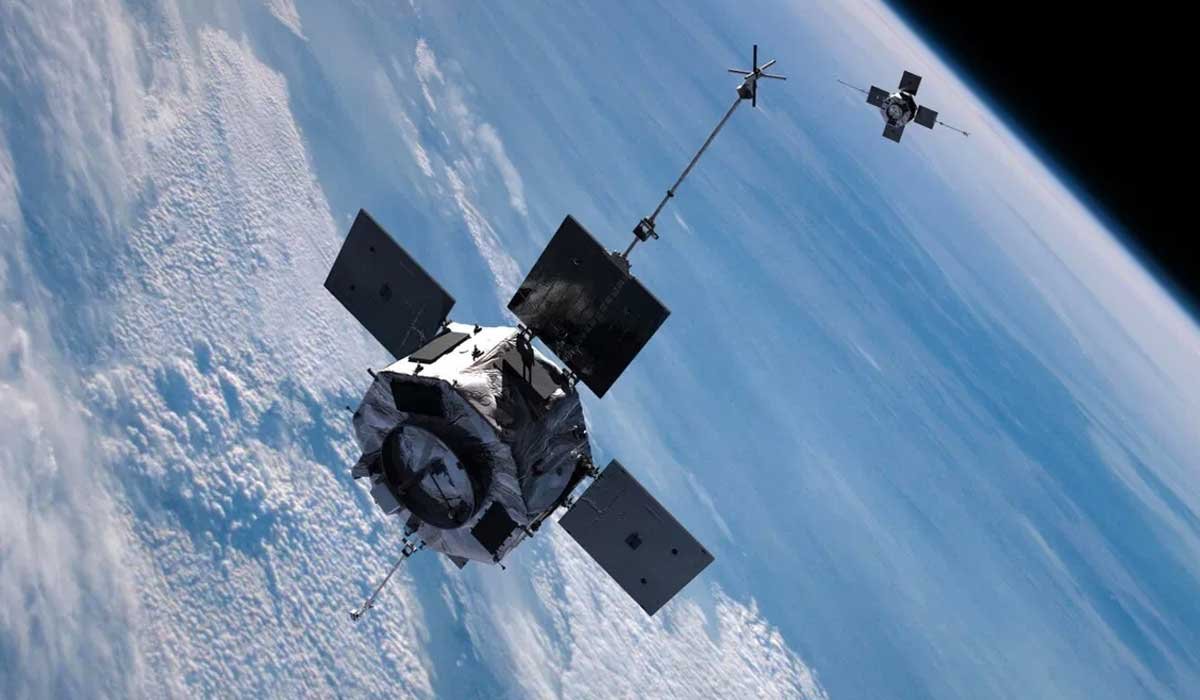
A retired NASA spacecraft recently made an uncontrolled reentry into Earth’s atmosphere, drawing global attention from scientists and space enthusiasts. The spacecraft, known as Van Allen Probe A, spent more than a decade orbiting Earth while studying the planet’s radiation belts.
After completing its scientific mission and running out of fuel several years ago, the spacecraft gradually lost altitude. Eventually, atmospheric drag pulled it out of orbit, causing it to plunge back toward Earth in March 2026.
Why the Spacecraft Returned Earlier Than Expected
The spacecraft was originally expected to remain in orbit until the mid-2030s. However, increased solar activity during the current solar cycle created stronger atmospheric drag in Earth’s upper atmosphere. This effect slowly pulled the satellite downward, accelerating its return to Earth.




Solar activity can heat and expand Earth’s upper atmosphere. When this happens, satellites in low Earth orbit experience greater resistance, causing them to lose altitude faster than predicted.
What Happened During the Reentry
When the spacecraft entered the atmosphere, it experienced extremely high temperatures caused by friction with air molecules. Most of the spacecraft’s structure burned up during this fiery descent.
Experts explained that only a few small pieces might survive the intense heat and reach Earth’s surface. Even in those cases, debris typically falls into remote areas or oceans because much of the planet is uninhabited.
Reports indicate that the satellite’s reentry occurred over a remote region of the Pacific Ocean, significantly reducing any potential risk.
The Mission That Studied Earth’s Radiation Belts
The spacecraft was part of NASA’s Van Allen Probes mission, which launched in 2012 to study the radiation belts surrounding Earth. These belts are zones of high-energy particles trapped by Earth’s magnetic field.
Understanding these regions is important because radiation belts can affect satellites, astronauts, GPS systems, and communications technology. Scientists used the mission’s data to better understand space weather and how solar storms influence Earth’s near-space environment.
The mission was initially planned to last only two years but continued for about seven years, providing valuable scientific discoveries.
Is There Any Danger From Falling Spacecraft?
Despite alarming headlines about satellites crashing to Earth, experts emphasize that the risk to people is extremely small.
According to space monitoring agencies, the probability of someone being harmed by debris from this spacecraft was estimated at roughly 1 in 4,200, which is considered very low by international safety standards.
In addition, about 71% of Earth’s surface is covered by water, making it highly likely that any surviving debris falls into the ocean.
The Future of Space Debris Monitoring
Events like this highlight a growing challenge in space exploration: managing satellites after they reach the end of their operational life.
Space agencies increasingly design spacecraft to burn up safely in the atmosphere or guide them toward controlled ocean landings. This helps reduce the long-term risks of orbital debris and protects both satellites and people on Earth.
Meanwhile, the spacecraft’s twin satellite remains in orbit but is expected to reenter sometime in the early 2030s.
Why did the NASA spacecraft return to Earth?
The spacecraft had completed its mission and ran out of fuel. Over time, atmospheric drag slowly pulled it out of orbit until it reentered Earth’s atmosphere.
Was the reentry dangerous?
No. Scientists estimated the risk of injury from falling debris to be extremely low.
Did the spacecraft burn up completely?
Most of the spacecraft burned up during reentry due to extreme heat, although small fragments may have survived.
What was the spacecraft studying?
It studied Earth’s radiation belts, helping scientists better understand space weather and its impact on satellites and astronauts.
Disclaimer
This article is created for informational and educational purposes for NZ Indian Insights. The content is independently written based on publicly available reports and general information and does not reproduce copyrighted material from any specific news source.