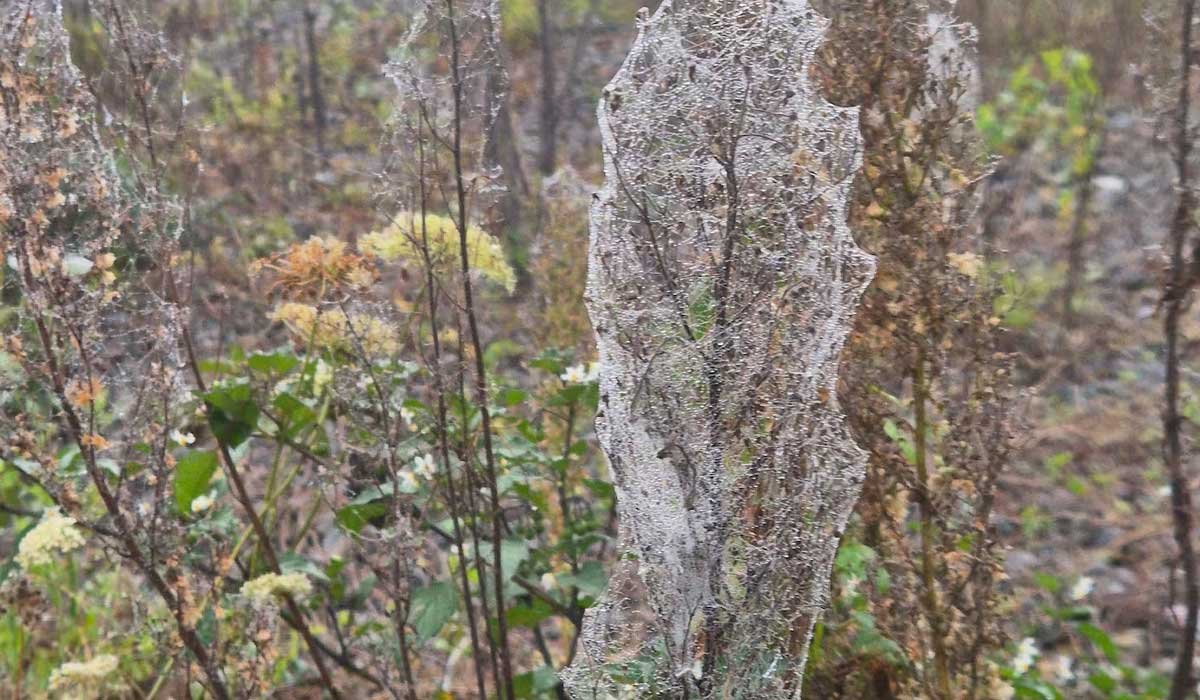
When people across parts of New Zealand’s North Island woke up recently, many were surprised to see parks, fences, trees, gardens, and even entire fields wrapped in silky white spider webs. In some places, the webs shimmered in the morning sunlight like frost covering the ground.
For many residents, the sight looked strange, almost like something from a movie. But according to experts, this is actually a natural seasonal event and a reminder of how powerful and fascinating nature can be.
A Natural Event That Feels Unreal
At first glance, thousands of floating spider webs may sound alarming. Some people even worried that dangerous spiders were spreading across towns. However, experts say there is no reason to panic.
The phenomenon is linked to a behaviour known as “ballooning,” where young spiders release fine silk threads into the air to travel to new locations.
In simple words, the spiders are not invading towns — they are relocating and surviving.
This unusual web-covered landscape has appeared in multiple North Island areas after periods of warm weather followed by wet conditions. Experts believe recent weather patterns created ideal conditions for spider activity.
Why People Are Talking About It Online
One reason this story has become so popular is because the visuals are dramatic. Entire lawns appear wrapped in silver fabric. Trees glow in sunlight. Floating strands drift through the air.
For many New Zealanders, it is not something they see every year on this scale.
Photos shared online from Huntly, Havelock North, and other regions created curiosity and confusion. Some residents described the view as a “silver sea” when sunlight reflected off the webs.
In today’s social media world, unusual natural moments quickly become viral discussions. But beyond the internet reactions, this event also shows how closely weather, seasons, and wildlife are connected.
Nature Always Finds a Way
some spiders use silk like a parachute, allowing air currents and even electrical charges in the atmosphere to lift them.
It may sound unbelievable, but nature has always worked in extraordinary ways.
New Zealand has experienced several unusual environmental events in recent years, from severe storms and cyclones to glowing skies and changing seasonal patterns. Many experts believe shifting weather conditions can influence animal behaviour more frequently.
The spider web phenomenon is another example of how small environmental changes can create huge visual impacts.
Fear vs Curiosity
One of the biggest reactions online has been fear. Many people dislike spiders, so seeing thousands of webs naturally creates anxiety.
But this is where education matters.
The spiders involved are generally tiny and harmless species. Experts say they are simply following survival instincts and are not dangerous to humans.
Instead of fear, this moment can become an opportunity to appreciate New Zealand’s biodiversity and natural environment.
Sometimes nature creates scenes that remind people the world is still full of surprises.
The Bigger Environmental Conversation
Events like this also start bigger conversations about climate and ecosystems.
When unusual natural events become more visible, people begin paying closer attention to seasonal changes, rainfall patterns, and wildlife movements. While spider ballooning itself is not new, the visibility and scale of these web blankets have captured public attention in a unique way.
New Zealand’s environment is constantly evolving, especially after periods of heavy rainfall and changing temperatures. Recent extreme weather events across the North Island have already shown how sensitive ecosystems can be.
The spider webs may disappear within days, but the discussion around nature and climate will likely continue.
A Reminder That Nature Can Still Surprise Us
In a fast-moving digital world, moments like this remind people to stop and observe the environment around them.
What looked scary to some became beautiful to others. Children watched spiders floating through the sky. Photographers captured glowing fields covered in silk. Social media users shared awe instead of panic.
That may be the most interesting part of this story.
Nature does not always behave in ways humans expect. Sometimes, even tiny spiders can transform entire landscapes overnight.

The North Island spider web phenomenon may seem strange, but it is ultimately a harmless and fascinating natural event connected to seasonal spider migration and weather conditions.
While the images shocked many residents, experts continue to reassure the public that these spiders are not dangerous. Instead, they are simply part of New Zealand’s natural ecosystem doing what they have always done.
For some people, the webs looked creepy. For others, they looked magical.
Either way, it became one of the most talked-about environmental moments in New Zealand this week.
Why are spider webs covering towns in New Zealand?
The webs are caused by a natural spider behaviour called ballooning, where young spiders travel using silk threads carried by the wind.
Are the spiders dangerous?
Experts say the spiders involved are generally harmless small species and do not pose a danger to people.
Which areas were affected?
Reports mainly came from parts of Waikato, Hawke’s Bay, Auckland, and nearby North Island regions.
Is this connected to weather changes?
Experts believe recent warm temperatures and wet weather helped create ideal conditions for the phenomenon.
Disclaimer: This article is an independently written opinion-style summary created for informational purposes only. All original news credits belong to their respective publishers and sources.