

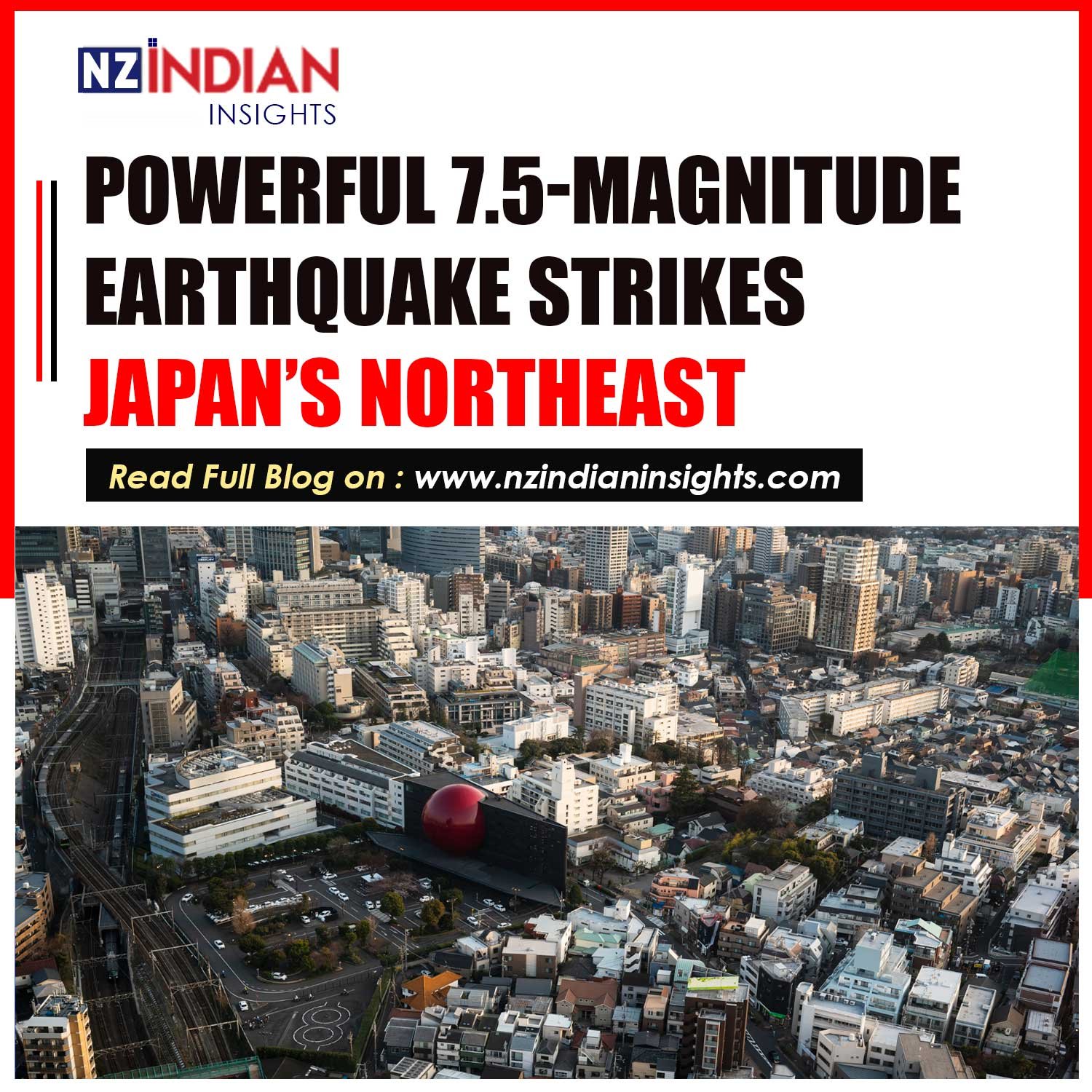
A powerful 7.5-magnitude earthquake struck Japan’s northeast region late Monday night, triggering urgent tsunami warnings and large-scale evacuations across coastal areas. The quake caused strong shaking across Aomori, Hokkaido, and surrounding prefectures, prompting authorities to activate emergency response systems within minutes.
What Happened
- The earthquake occurred around 11:15 p.m. local time, with its epicentre located offshore near Aomori Prefecture at a depth of approximately 54 km.
- Japan’s Meteorological Agency initially warned of possible tsunami waves up to 3 metres, leading to the evacuation of nearly 90,000 people from vulnerable coastal zones.
- Several coastal monitoring stations later recorded tsunami waves ranging between 20 cm and 70 cm before warnings were gradually downgraded to advisories.
Damage & Immediate Impact
Strong Ground Shaking
- In Hachinohe, the quake registered an “upper 6” on Japan’s 1–7 intensity scale — a level at which standing or walking becomes extremely difficult.
- Reports indicated falling furniture, broken windows, and minor structural damage across parts of Aomori and Iwate.
Injuries Reported
- Early updates confirmed multiple injuries, with several people transported to local hospitals.
Transport & Utilities
- Train services by East Japan Railway Company were temporarily suspended in the affected region.
- Power outages impacted thousands, though most areas saw electricity restored within hours.
- Nuclear facilities in the region reported no abnormalities.
Aftershocks Likely
Authorities have warned residents to prepare for strong aftershocks over the next several days. Japan’s east coast — including Hokkaido, Aomori, Iwate, and parts of the Kanto region — has been urged to stay alert for further seismic activity.
What This Means for Global & NZ Audiences
- Preparedness Reminder: Japan’s rapid response highlights the importance of emergency readiness — relevant for quake-prone regions like New Zealand.
- Travel Impact: Anyone with friends, family, or travel plans to Japan should monitor official safety updates.
- Economic Ripples: Early financial reports indicated short-term market fluctuations following the quake, showcasing how natural events can influence global economic conditions.
Disclaimer
This article is an independently written news summary created for informational purposes. All details are based on publicly available news reports and official statements. NZ Indian Insights does not claim ownership over any original reporting and encourages readers to follow official authorities for real-time updates.




FAQs:
Where did the earthquake strike in Japan?
The quake hit off the coast of northeastern Japan, near Aomori Prefecture, at a depth of around 54 km.
How strong was the earthquake?
It measured 7.5 on the Richter scale, making it a major seismic event capable of causing significant shaking and potential damage.
Was a tsunami warning issued?
Yes. Japan’s Meteorological Agency issued tsunami warnings, later downgraded to advisories, after waves between 20 cm and 70 cm were recorded.
Did transport and utilities get affected?
Yes. Train services were suspended temporarily, some regions faced power outages, and emergency response systems were activated across coastal towns.