

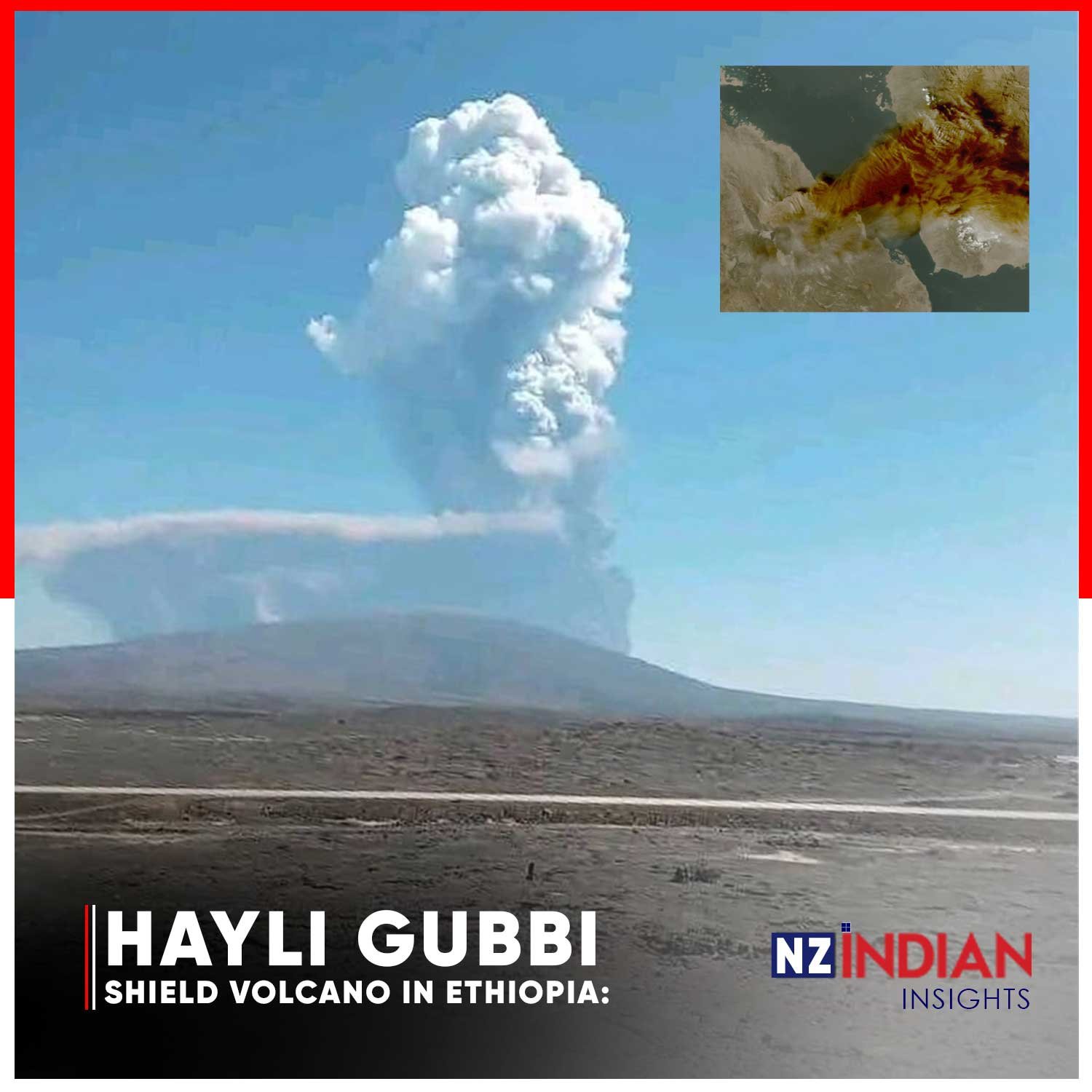
Volcanic Ash From Ethiopia’s Hayli Gubbi Reaches Delhi, Flights Disrupted and Authorities on Alert
A massive volcanic ash plume from Ethiopia’s Hayli Gubbi volcano reached parts of northern India late Monday, triggering aviation advisories and raising concerns amid Delhi’s ongoing air-quality crisis.
What Happened
The Hayli Gubbi volcano, dormant for thousands of years, erupted on Sunday, sending a high-altitude ash plume soaring up to nearly 45,000 feet. Meteorological agencies confirmed the plume’s movement across the Arabian Sea, gradually entering Indian airspace over northwestern states.
By late evening, the ash cloud was projected to approach regions including Delhi-NCR, Rajasthan, Punjab, Haryana, and parts of Uttar Pradesh.




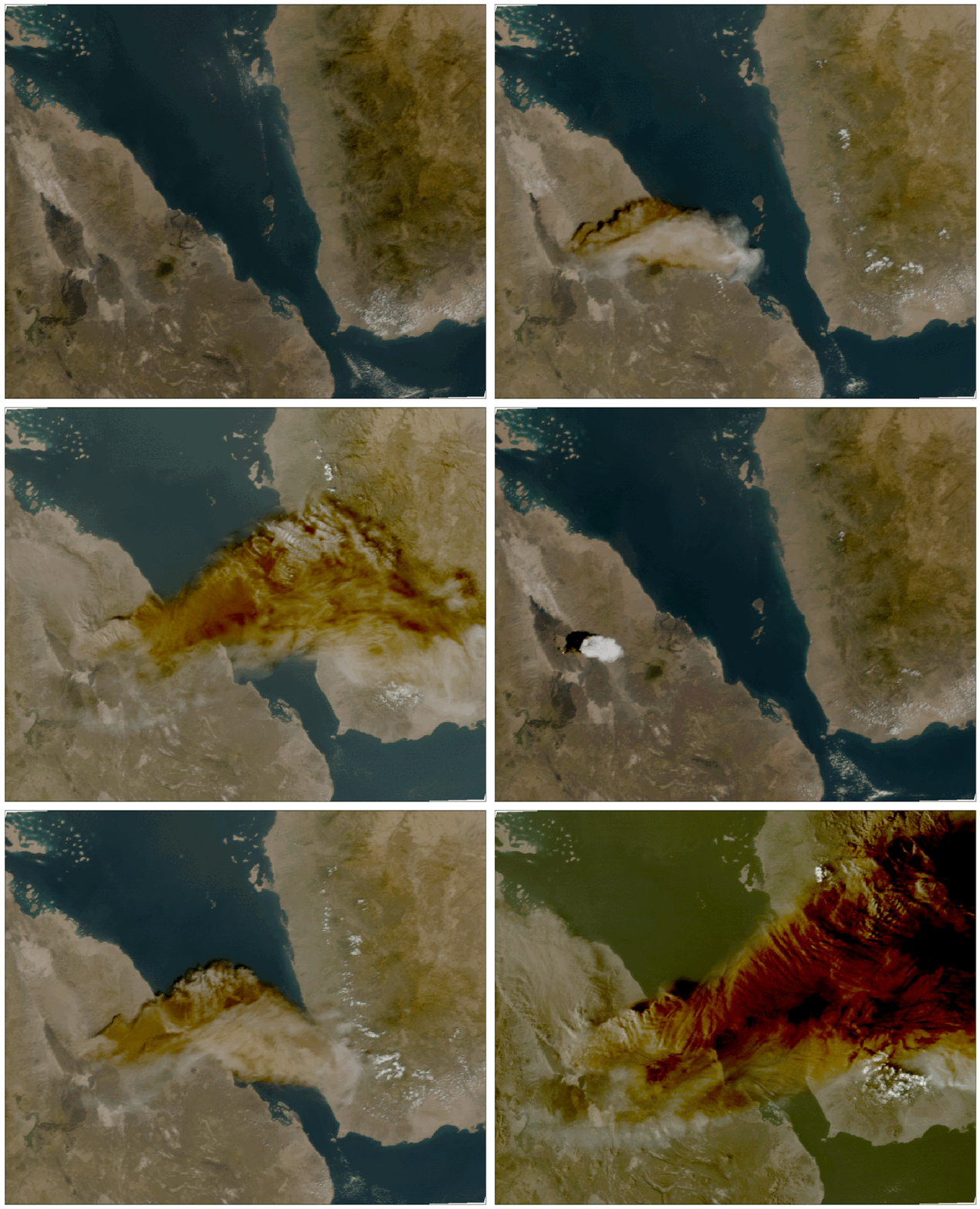
Image credit : Guido Cioni (Atmospheric Data Expert at Airbus)
Aviation on High Alert
India’s aviation regulator, the DGCA, issued a safety advisory to all airlines, instructing them to:
- Avoid flying through affected airspace
- Re-plan routes and change altitudes
- Carry additional fuel where necessary
- Report any unusual engine behaviour or cabin smells immediately
Multiple airlines took precautionary measures, leading to flight cancellations and diversions. Some international flights were rerouted, while domestic carriers temporarily suspended services on selected routes.
Airports were also advised to inspect runways and aprons for possible ash deposition and halt operations if visibility or safety were affected.
Air Quality and Public Safety
Experts say most of the volcanic ash is traveling at very high altitudes, reducing the chance of a major impact at ground level. However, minor weather changes, hazy skies, or slightly altered sunrise colours may occur as the plume passes.
Delhi, already struggling with toxic air, reported “very poor” AQI levels on Tuesday morning. Authorities noted that the volcanic ash is not the primary cause of the pollution spike, but continuous monitoring will continue.
Aviation authorities and airlines are constantly tracking satellite updates and ash movement forecasts. They are prepared to make further operational changes if required.
Meteorologists emphasise that while the situation is unusual, health risks remain low for the general public at this stage.