

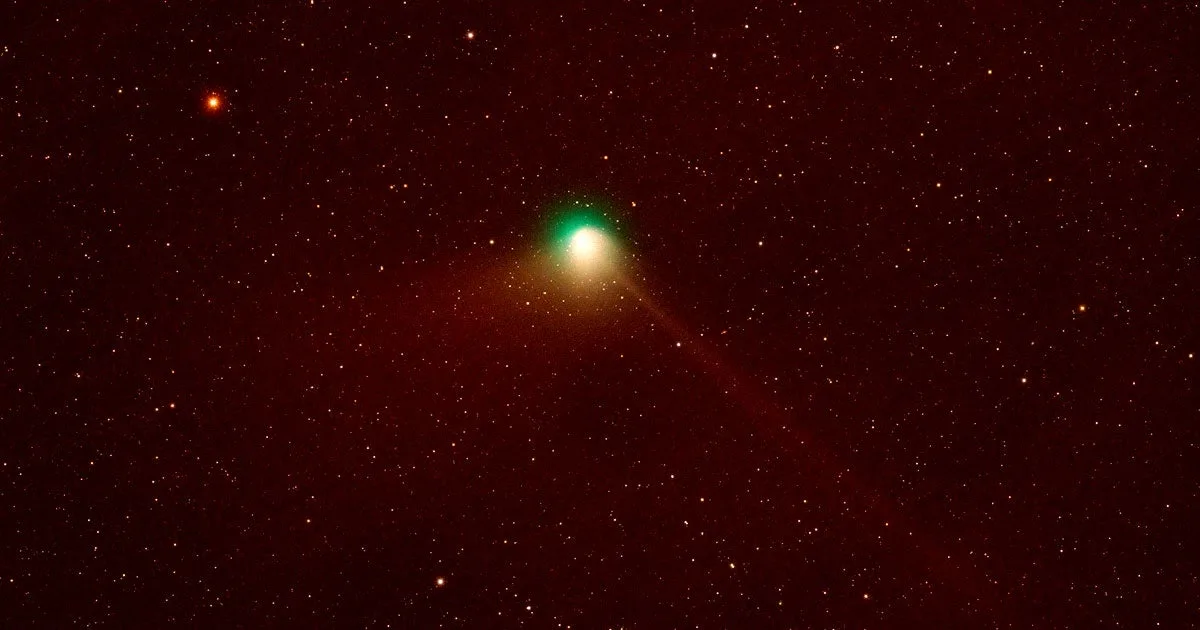
Astronomy has a way of capturing our imagination — and few objects have done that quite like 3I/ATLAS, the interstellar visitor that passed through our solar system in 2025 and sparked curiosity, speculation, and even debate about its nature.
So, is 3I/ATLAS a comet? The short answer: yes — by all scientific evidence, it behaves exactly like a comet, not a spaceship or alien probe.
Let’s unpack this fascinating cosmic object in a friendly, clear way.




What Is 3I/ATLAS?
3I/ATLAS — officially designated C/2025 N1 (ATLAS) — is an interstellar comet, meaning it originated outside our solar system and passed through on a hyperbolic trajectory. It was first spotted in July 2025 by the ATLAS telescope in Chile.
The “3I” in its name means:
- 3 = the third confirmed interstellar object ever observed
- I = interstellar
- ATLAS = the survey system that discovered it
This puts 3I/ATLAS in rare company — after ‘Oumuamua (2017) and 2I/Borisov (2019) — making it a once-in-a-generation scientific opportunity.
Why Scientists Say It’s a Comet
Even though 3I/ATLAS attracted wild speculation online in 2025 and 2026, scientists have been clear:
✅ It has a solid, icy nucleus and a coma — the fuzzy cloud of gas and dust typical of comets when they heat up near the Sun.
✅ Its trajectory is hyperbolic, meaning it came from outside the solar system and is not bound by the Sun’s gravity.
✅ Observations from multiple telescopes confirmed its tail and gas emissions, consistent with comet behavior.
These traits mark 3I/ATLAS as a genuine comet — just from another star system, not a manufactured object.
Recent Developments
Here are some of the latest verified updates about 3I/ATLAS:
Radio Scans Came Up Empty
Powerful radio telescopes scanned the comet for unusual signals and found none, consistent with natural cometary behavior.
Scientists Scanned for Aliens
Despite some science-fiction-style headlines, dedicated scans aimed at detecting intelligent signals showed no evidence of artificial origin.
Close Approach to Earth
In December 2025, 3I/ATLAS made its closest flyby at about 270 million km from Earth. It posed no risk and offered astronomers a chance to study it closely.
Stunning Images
Space telescopes captured high-resolution images showing the comet’s coma and tail, giving scientists a rare opportunity to study material from another star system.
Why 3I/ATLAS Matters
This interstellar comet gives astronomers a peek into the building blocks of other solar systems. By comparing its dust and gas composition with the comets in our own solar system, we learn more about cosmic chemistry and planetary formation elsewhere.
Even though it’s a comet, it’s not ordinary. Its interstellar origin makes it scientifically rare and incredibly intriguing.
FAQs:
Could 3I/ATLAS be an alien spacecraft?
Current evidence strongly supports that 3I/ATLAS is a natural comet, with no confirmed artificial signals or behaviors.
What makes this comet different from others?
Its origin outside our solar system and status as only the third interstellar object detected make it extremely rare and scientifically important.
Why was there speculation about aliens?
Its interstellar origin and unusual appearance fueled speculation online, but these ideas lack scientific support.
Will it come close to Earth again?
No – 3I/ATLAS is already heading back into interstellar space after its late-2025 flyby.
Disclaimer
This blog post is based on current publicly available scientific observations as of January 2026. Interpretations of astronomical objects may change with ongoing study. Speculative theories not supported by credible evidence are included only for context and do not reflect confirmed science.